 ask me about wine and food pairing. They should. I'm a sommelier and my job is to help pair wine and food. Wine and food go together. It's a new-fangled concept that we sip wine on its own-- something that is a bit American in nature. Europeans enjoy wine as a food and don't have the strange history of Prohibition and government intervention around alcohol consumption that we have in the US. It's part of their everyday lives and wine drinking is as natural as eating.
In Europe, the local wine and food go together naturally. Getting wine in Italy, Spai
 n, Portugal, or France is easy to do. Most likely your neighbor is making some if you live in the country, and if you live in the city, there is a bounty of affordable domestic wines from which to choose. Pairing is less of an issue when you go to Europe because most of the wine will be compatible with your meal -- the proprietor buys wines from regions that match his cuisine. I've been to Florence a few times (including living there in college), for instance, and I've never had a bad pairing. Tuscan wines go fabulously well with Florentine cuisine. I'd be curious to hear if you've been to Europe and had a bad wine/food experience. I've never heard of one (bad food, yes, bad pairing, no).
 In the US we have much more diversity and therefore much more of a challenge with pairing. It's a little more complex given the bounty of preparations, fusion cuisine, and the staggering amount of wine available. Like everything else in wine -- it's totally overcomplicated here and is a pain in the arse to unravel.
I came face to face with this issue as I was preparing to do a tasting with a group that focused on wine and food pairing. I started doing research on the internet and in wine books to get some new ideas and suggestions. Then I got really annoyed.

Wine pairings are decreed without explanation. WTF? People just throw out suggestions with nothing to back it up. To me, that's just words on a page that have no meaning. Is there a wine pairing mafia or is HAL 9000 from that 2001 movie doing all the pairings? It just is what it is.
 When it comes to food pairing, wine and food critics and bloggers like to mandate the law like they were passing over the 10 Commandments to Moses. No explanation, no wiggle room, just a drumroll and BAM! here's your pairing. There are pairing generators and sites, critics that pride themselves on food and wine pairing expertise, and enthusiasts who issue wine and food pairings like they were army marching orders. The common thread: almost all of them tell us what we should drink and eat together with nary an explanation of why these things might fit. Hey guess what? I'm guilty of it too. I do it my posts every week. Shame on me.
 Before I go further, I should tell you that I'm not of the school that you should drink anything with anything. I do think that there are certain food and wine combos that 90% of the population would find awesome. I've also come up with a few nasty-ass pairings before, where the wine has been replaced mid-meal because the acids clash, the wine is killing the food, or it just tastes bad to me and MC Ice. I like other people's suggestions and reasoning, but I'm not one for edicts. I don't like being told what to do without explanation (I'm sure after reading this blog you've pinned me for this type). I want to know why the pairing works and it's a hard thing to come by.
As I searched for ideas on pairing -- something new or interesting, and something that would fit with the specific preparation of the caterer with whom I was working -- I got more and more irritated. I couldn't find one resource that talked about preparations of certain foods or sauces or matches between acids/tannins in the meat or seafood or veggies with certain wines. Yeah, I get that Pinot Noir and salmon go well together. Why, though? You'll be hard pressed to find an answer.
As we're all building our wine vocabulary and knowledge, I think it would help to cut the BS on random proclamations about food and wine pairing. Breaking things down to the why can help everyone understand how to extrapolate and make better choices in pairing.
So I'm turning over a new leaf. From here on out, I am going to focus more on the pairing section of my posts. Since I do know about pairing from my experiences and studies, I'm going to start sharing. I'm going to tell you about the spices and preparation and why certain wines go well with certain foods. That way you can make choices for yourself based on what you're cooking (or what McD's drive through has, if that's how you roll), instead of taking an unexplained pairing doctrine and trying to make it work for you.
No time like the present for change, so I'll start today by talking about the pairings I made for my event...
Pairing 1: Seared Scallops in Butter Sauce with Sancerre from the Loire Valley
 in France
 Why it works: Scallops (when well-prepared) are lightly sweet and have a creamy texture. They melt in your mouth and are a tad salty when they are put with a butter sauce. Sancerre is a highly acidic Sauvignon Blanc and it's aromatic and fruity. The pear, tart apple, and citrus flavors of the wine bring out the sweetness of the scallops at first. Then the acid in the wine cuts through the creaminess of the shellfish and the butter to make your mouth feel clean and refreshed for the next bite. Also, if there is salt in the preparation, the mineral qualities of the wine temper the salt and integrate it into the creaminess the scallop.
Pairing 2: Mushroom Ravioli with Tomato Basil Sauce with Oregon Pinot Noir
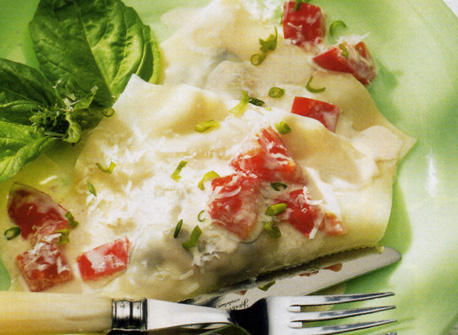 Why it works: Pinot is called the "chef's wine" because it goes with a lot of different foods. I absolutely love it with mushrooms because both are so earthy. They bring out the best in each other, and the sensation is a really woodsy, dark earth flavor -- which I love (MC Ice hates mushrooms so this is his own personal hell, BTW). If you are grossed out by eating potting soil, the other components in the dish come to the rescue: the starch will help absorb the fruitiness of the wine and the tomato sauce is acidic and brings out the acid in the Pinot. The sensation is something earthy yet fruity with mouth cleansing acid that makes the dish taste fresh, not heavy or like eating dirt.
 Pairing 3: Beef Tenderloin and Roasted Portabello Mushrooms with Bordeaux (Cabernet Sauvignon & Merlot blend)
Why it works:
 Beef tenderloin is just that -- tender in texture. It's soft protein and delicate yet still beef. Portabello mushrooms are the non-red meat eater's (I am a non red meat eater, FYI) analog to all things beef. Here, the classic pairing just works. Bordeaux is complex, with strong tannins that can work with the protein to make the texture of the meat less dense. The wine adds complex flavor (black fruit, tobacco, leather, cedar notes) to the meat's simpler preparation and the meat will soften the tannin of the wine as it's absorbed into the cut. The result is a satiny, soft texture that neither the wine nor the food will have on its own.
 Pairing 4: Chocolate Fondue and Banyuls from the South of France
Why it works: Let me be honest here, everyone has a different palate, but I thin
 k the marketing ploy of pairing Cabernet and chocolate is horrible. The wine AND the chocolate taste bitter to me when I have them together and I need coffee to trump them both. That said, I have a massive sweet tooth and I love wine, so I found the perfect solution in this pairing. Banyuls is rich and full-bodied, and is made like Port. Fermentation is halted by adding brandy while there is still sugar in the wine. The finished product is sweet and alcoholic but in this case more delicate than a Port.
Usually dessert wine tastes best when it's sweeter than the dessert, so in this case we've got total perfection. The chocolate makes the Banyuls taste like black plum, raisin, and black cherry and the Banyuls makes the chocolate taste like orange and espresso. No bitterness, just enhancement from the sweetness and the fruitiness of the wine with the choco.
I'd love to hear from you about good or bad pairings you've had. We'll try to dissect them and figure out why they worked so you can get more good pairings together, or why they didn't so you can avoid bad ones! Readmore »»
