Showing posts with label Food and Wine Pairing. Show all posts

Thursday, June 30, 2011

Wine For Normal People Radio : Episode 020 Best Wines for July 4th/Summer

Of course I love M.C. Ice and for those of you who are with me, don't worry -- he'll make appearances again, but Rick is back from hiatus (which he took because his business is en fuego, not for any other weird reason as some people speculated...).

We returned with bang for the 4th. We give some great red, white, and rosé wine recommendations for your 4th of July and Summer outings AND include some stuff on sparklers too (not the kind you light on fire). We focus on food pairings and gift ideas.


Here are the Show Notes:

  • A new, shorter intro to get right into the good stuff
Main Topic - Wines for 4th of July festivities and other Summer sippers
  • Red Wines - Pairing suggestions for grilled foods, light reds for sipping, and which red wines to bring as gifts
  • White Wines - Refreshing choices for the Summer heat, some food pairing ideas, and which white wines would go over well at a party
  • Rosé Wines - Not all are created equal... We provide some tips on picking the best rosé wines
...and the Grape of the Week - Grenache (or Garnacha): The flavor profiles and a little history on the grape

Have you tried a Grenache/Garnacha? If so, join the conversation on the Wine For Normal Peopel Facebook page


Click here or download the 'cast below...


Send us questions, comments, and some love on Twitter @NormalWine

Drop a comment below

Dig the podcast? Please review us on iTunes and we'll give you a shout out!


Readmore »»

Monday, April 4, 2011

Wine For Normal People Radio: Episode 13, Food & Wine Pairing - The Great Controversy

Yeah, I'm late on posting this because it was released on the airwaves on Friday...(I blame it on taxes. URGH!).

If you haven't heard this 'cast yet, it may be a controversial one. I don't follow traditional rules of food and wine pairing but I'm also dead set against the "anything pairs" philosophy too.

To give you a teaser...I say if you want to get a good pairing, make like a vegetarian! I presented this concept at the American Culinary Federation's Southeast Regional Meeting and it was well received by the chefs...but let's see what you think. Of course, please comment below so I can hear what you have to say!


Here's a quick outline of what to expect:
  • Shout-outs - Some really funny Twitter replies, comments on the blog, and Facebook posts
  • Main Topic - Food and Wine Pairing
    1. The great controversy - should we drink what we like?
    2. Some basic rules to remember
    3. The regional influence on food and wine pairing
    4. Dessert!! Should you drink wine with sweets?
  • Grape (or Wine Style) of the Week - Rosé (roh-ZAY)...it may be pink but that doesn't mean it's sweet
    1. How rosé wines are made
    2. Grapes from which rosé is made
    3. Well-known regions for producing rosé wines
    4. Typical flavor profiles of rosé

Here's the link:


To listen, download the podcast from the iTunes store (and if you like it, and haven't done so already, please add a comment or rate it so we can make sure to stay on the radar, which helps other folks find us easily that would be great!), click the link above, or use the player below! Thanks for listening!
Readmore »»

Tuesday, December 21, 2010

Christmas for Non-Christians: How the Other Quarter Drinks and Eats on 12/25

Ok, so Christians make up 33% (give or take) of the world's population and 70% - 75% in countries like the US, Canada, and the UK, where most of you are located. That means that on December 24th and 25th most of you are going to be doing stuff like hanging stockings, waiting for Santa (maybe this year you could give him a nice Bordeaux instead of milk? It pairs well with chocolate chip cookies, FYI), cooking a Christmas goose, and opening tons of presents while admiring your illuminated, beautiful tree. Who could ask for more?

No one...except maybe those of you who are dreading dinner with the in-laws, lame conversation with distant family members, and the fake face you have to make when you open the box with the hideous shirt that you have to pretend to like ("I thought since it was from Banana Republic you would like it, right?" You better hope there's a gift receipt...).

So instead of doing what most other bloggers are doing -- giving you pairings for Christmas dinner -- I'm going to give you the skinny on how much of the other 25-30% lives on Christmas, while
you're kicking it with the fam.

Ever wonder what your [fill in the blank -- Jewish, Hindu, Shinto, Buddhist] friends DO on these holiest of days? As a Jew, I feel I can speak with some authority, and give you the real deal. If you're not headed to a Christian friend's house, you've got a busy day in front of you...and one that, if planned right, is full of drinking lots of wine.


The trick is excellent advanced planning. While most of you are out picking up last minute stocking stuffers and food and wine to go with your lasagna or goose or turkey, non-Christians are hitting the wine store in anticipation of several different wine consuming occasions over the next evening and day.


Perhaps now you're curious. If so, keep reading -- no secrets here.

Let's take this chronologically:

Christmas Eve.
This is the night where you catch up on all Netflix and DVR recordings. If you're lucky, a pizzeria around you may deliver. If not, cereal or pasta may be on the menu, followed by a marathon of Gossip Girl, The Sopranos, Fringe, or the Twilight Saga movies. The marathon must be accompanied by a rich hearty red, to keep you warm as you cuddle up on the couch with a fleece blanket (wine suggestions at the bottom of this post).

Christmas Day.


AM. Since there's no anticipation of what Santa may have left, non-Christians can either safely sleep until noon or just wake up and treat this day like any other. Going off the "it's 5 o'clock somewhere" rule, a 10:00 AM mimosa may be on the menu. (The secret to a perfect mimosa: Make sure you pick up the cheapest bottle of sparkling wine possible for the mix -- they tend to be sweet and have huge bubbles, which complement the orange juice perfectly). Continuing the theme from the previous evening, the Netflix marathon commences during your down time in the day. We often also take a nice walk (No one is out. No one. It's amazing).

Anti-lunch.
On this day, lunch is either brunch or it's a throwaway meal. No wine required. It's bagels or leftovers, but nothing major.

Early Bird Dinner.
And around 4:30, the main eating event begins. I used to live with my sister in Boston and we always meticulously planned dinner -- it was either Chinese (where every single Jew in Boston would be, so there'd be a wait) or Indian (less crowded but less festive as well). Why not Thai or Korean? Theses were usually closed! So we would alternate between the two each year. To these restaurants, we bring our own wine.

Here's the beauty in that -- regardless of the eastern cuisine chosen, our BYO wine choices (the corkage or BYO fee was always like $5 or $10 so it was worth it!) are pretty much the same. The same wines that complement the warm spice in Indian, can also go with the hot spice and saltiness of the Chinese -- it's a perfect pairing storm. So if we decide on something low key or something more "scene-y" (yes, if you enter a Chinese food restaurant on Christmas, there will be lots of people there, all presenting themselves in fascinating ways), it makes no difference. The stuff from our wine shop was going to work. How often do we get a pairingpalooza like that? That is our Christmas wish fulfilled for sure.

Mandatory Movie. Following our gawking session of/or participation in being the loudest, most unruly, and obnoxious people around at Chinese or just good food and a non-event at Indian, non-Christians hit the 6:00 pm movie. There is a two-fold reason for the mandatory movie. First, you can usually get to see what you want without the lines. Second, because you will be starving about 25 minutes after you leave the Chinese restaurant, you're going to need popcorn and Junior Mints as a refill.

There is a slight issue with the movie, which may take it off the docket in future years: Somehow this ritual has moved from a non-Christian underground day, to being a mainstream evening to hit the theaters. Whereas years ago this was always on the sched, in recent times it's less appealing than going home for one last glass of hearty red before turning in.

And there you have it. While you are unwrapping presents, eating Christmas goose or ham or whatever, and hanging out with family... about a quarter of the population is eating Chinese, obsessively viewing media, and drinking a ton of wine to stay warm!


Whatever you do this Christmas, be safe, enjoy, and drink great wine!
__________________________________________________________

The Wine Shopping List


Christmas Eve Yummies...


Budget choices:
  • Australian Shiraz (d'Arenberg's "The Footbolt" is great for less than $20)
  • Argentinean Malbec (Kaiken is a great choice for around $12)
  • Cabernet Sauvignon (McManis for $15 is awesome)
  • Spanish Monastrell (Hecula for under $15 kicks ass)
Higher tier choices:
  • Chateauneuf-du-Pape (if you want to spring, Beaucastel or Vieux Telegraphe)
  • Bordeaux blend (Go big and get a classified growth from the right bank, you can find a great one for $50)
  • Napa or Sonoma Cabernet Sauvignon (I love Darioush or Michel-Schlumberger)
  • Gran Reserva Rioja (Muga, Marques de Riscal are solid choices)
Christmas Day Choices What, pray tell, are these wines that go so well with Asian food? There's a limited set and they are all white wines, so stock up in the next few days...
  • German Riesling: Dry or a little sweet (Kabinett, Spatlese, or Auslese is what it will say on the bottle). The peachiness is delicious and soothes the spicy, hot bite, and goes well with the salt and sourness of a lot of the dishes. Try Schloss Reinhartshausen or Schloss Saarstein if you can get them.
  • Gewurztraminer from Alsace, France: With its exotic spice aromatics and lower acid, this is an ideal complement for Indian but works great for sweet-'n-sour Chinese dishes too. Try Trimbach -- easy to find and delicious.
  • Vouvray (Loire Valley, France). Vouvray is an area in the Loire Valley that makes whites from the Chenin Blanc grape. They run the gamut from dry to sweet, but an off-dry version is floral, rich in apple and peachy notes, and works for the same reasons Riesling -- this grape has got some acid to it. Lots of choices. If you want a cheapy, but a good-y, try the Le Chateau from Trader Joe's (it's like $7!)
  • Sauvignon Blanc: One from France (Sancerre, Pouilly-Fume) is a good bet. These have very straightforward flavors -- grapefruit, minerals, tart citrus -- and good acid to balance the saltiness of the dishes. These are probably better with Chinese, but with Indian Saag Paneer, you can't go wrong with a Sauv Blanc either. Lucien is a reliable and pretty well distributed Sancerre. For Pouilly-Fume, there are a ton of choices in the affordable section, but if you want the good stuff try something from Didier Dagueneau.
Hate white? There aren't a whole of red options that will pair with Asian/Indian. You don't want anything with too much complexity or it will ruin the food. For Chinese beef dishes, you could try an Aussie Shiraz. For duck, go for a fruity Central Coast Pinot Noir. All the other stuff, you won't regret going for the whites. Readmore »»

Monday, November 29, 2010

Mixed Results of Thanksgiving Pairings and an Amazing Non-Related Pairing

Whew, with the first round of decadent, butter-laden, obesity-inducing meals (aka, Thanksgiving chow) behind those of us in America, and one more on the horizon (whether that be in form of potato latkes or Christmas ham), I thought I'd do a post to share my pairing experience and ask if you'll comment and pay it forward so we can all figure out what worked and what didn't.

I'd love to say that I tested out all my pairing suggestions this year (I have at one point or another done it, so please don't think I'm suggesting stuff blind, BTW), but we drank just two wines and MC Ice and I disagreed on the results. I'll share those and, as a bonus, I'm going to tell you about the pre-Thanksgiving random-ass pairing we had because it was, surprisingly, THAT good.

Because I do love the wine and because I had it on hand courtesy of Destination Riesling (the advocacy group for this under-appreciated grape) I pulled out a bottle of the Dönnhoff Spätlese (SHPATE-lay-zah) Riesling for the meal. Without having had this brand before, I didn't know how sweet it would be, but thought I'd roll the dice. This is the perennial problem we all face when buying Riesling.

I'll dork out on Riesling for just a second in the hopes that this information (whether it be a refresher or new news) may make you less squeamish about buying the stuff. I think it's damn confusing, so hopefully a plain English explanation (with a little German thrown in) will make it less daunting.

So to break it down, Riesling is a grape that grows really well in cold climates like Central
Germany. I know the general perception is that Riesling is sweet, but when German growers pick it, it's generally kind of tart and ALWAYS really acidic -- that's just how the grape rolls. Now, if the growers decide to let the grapes hang out on the vines a little longer than regular harvest time (which is a risk because it could get cold and stormy and frosty), then the grapes may be slightly riper and the resulting wine fruitier and fuller, and often sweeter.

In a climate where it's cold and grapes don't ripen all that well, the Germans have decided that the longer the grapes hang on the vines, the higher quality they are. The thing is, this doesn't translate to what most contemporary wine drinkers consider high quality because according the German schema, the higher the quality, the sweeter the wine. It's all kind of cock-eyed, but if you know what the stuff means, you can avoid buying sweet wine from Germany and just get the kind of wine you want -- which for most of us is dry, aromatic, acidic Riesling that kicks ass and goes well with Indian food.


Here's a cheat list (with pictures) for you of the three most common German Riesling classifications out there:


Kabinett: ripe grapes (it actually means cabinet, like where you store the stuff). It is generally light in style, and usually a little drier than the next two levels because the grapes aren't as ripe. That said, I've had my share of off-dry Kabinett, so caveat emptor, my dry-loving wine pals.


Spätlese: late harvest, really just means ripe grapes. It can be dry or sweet. Usually if it's dry, it will say so somewhere on the label. The producer could indicate it by using the word "trocken" (see right) but these days I usually see them put DRY somewhere on the label. Germans are nothing if not efficient in labeling.

Auslese (OWS-lay-zah): select harvest. Means that the growers have hand-picked the grapes from selected bunches that are sweeter and riper than the Spätlese grapes. These wines can only be made when the weather is warm enough to get the grapes fat and juicy with ripeness. More often than not, these are sweet, but there ARE dry versions out there, rare though they may be. Much like the Spätlese, there will be a bit "To-Do" on the bottle if the wines are dry.

I won't get into these because they are rare, not produced in every vintage, and are definitely dessert wines, but for thoroughness there are three more levels of sweetness -- Beerenauslese, Eiswein (ice wine), and Trockenbeerenauslese. These are extremely sweet, never dry, and are generally super expensive.

The
Dönnhoff we had was a Spätlese and it was a little more than off-dry. I won't go into too much detail, but this producer is one of the most highly regarded in all of Germany. The family has been making wine since 1750 and although Nahe is a small region that many don't know, it's known among Riesling lovers as rivaling the famed Mosel for having the greatest Riesling wines. Dönnhoff is the king of the Nahe, and, some would argue is the best producer in Germany. The wines are known to be a little fleshier and fatter than Mosel's Rieslings but with great acidity. The vineyard from which this wine hails is called Oberhäuser Brücke and it is famed for its gray slate and amazingly powerful wines. For me, I can see why these wines are esteemed -- it was pretty damn good.

Here's the quick rundown:

The Wine:
Dönnhoff Oberhäuser Brücke, Riesling Spätlese, 2008 (translation --Dönnhoff is the producer, Oberhäuser Brücke is the vineyard, Riesling, the grape, Spätlese, we just went over that)

Price:
About $40


Color:
The lightly golden hue made it a little darker than what I would expect from a totally dry wine. Sugar darkens a wine a touch, so I expected some sweetness.


Smell:
It was a classic Riesling all right -- peach, lemon cookie, and white flowers just wafted into my nose and then there was a really light petrol or gasoline note.


Taste: The wine had a little spritz and it was noticeably sweet. It was very pleasant though -- peachy, lemony, with a really strong hit of cantaloupe or honeydew melon. There was a little bit of petrol smell after it left my mouth too -- kind of sassy. I liked the acid, it wasn't too strong but definitely present.

Food pairing: This was such a hit with all the savory food at Thanksgiving. The light sweetness and the acid just made everything even and smooth. The starches were lighter, and I was surprised that it was a great complement to the sweeter butternut squash soup and the sweet potatoes. The salty/savory stuffing was awesome with the wine too -- it was so nice with the herbal quality of my mom's famous recipe popcorn stuffing (it's stuffing with popcorn in it, not just popcorn). I don't eat turkey (just don't like it, sorry!) but it was a split decision at the table -- some loved the pairing, MC Ice hated it. I thought it was a fabulously versatile wine and it was a hit for my palate.


Drink or down the sink: For me, it was a total DRINK. I loved the complementary pairings of sweet with sweet and the contrast of savory with sweet. MC Ice hated the pairing and thought it made everything taste too sweet. He also is a total sweet wine hater, so take that as you will. It got a thumbs up from me, a thumbs down from him. Regardless, I
will make the call that it was a well-made wine and of high quality, even if its style isn't for everyone!

Now for a Thanksgiving honorable
mention.

The next wine on the docket -- Erath Pinot Noir from Oregon with Thanksgiving dinner. This is a wine I generally like. It's lighter in color and fr
uity and slightly earthy, but not a wine of great depth, I find. For $15, it's pretty good.

For me, it completely clashed with the starches. The acidity and fruit kind of made everything taste like an unripe cranberry! It wasn't something that worked for my palate at all. MC Ice, on the other hand, loved the way it went with everything, especially the turkey. He liked the contrast of the fruit and acid against the starch. What I found kind of angular, he found delicious. To each his or her own, I guess. This one is totally inconclusive -- maybe you can weigh in to tip the scales.

Finally, a non-sequitur to all of this. The night before Thanksgiving, for really no rea
son at all, I made a completely unseasonal, fattening, and wrong-holiday dish -- I made basil pesto. I know, it's not in season and it's not from my garden, but I saw basil at the store so I bought it and made pesto because, well, I wanted to. I make it with walnuts instead of pine nuts and it was a successful, yummy meal when placed over whole wheat pasta and tossed with a ton of grilled veggies.

Looking f
or something light and seaside-like (pesto is from Genoa, a seaside town in northeastern Italy so I thought I'd try something beachy), I grabbed a bottle of $5.99 Espirial Vinho Verde from Trader Joe's. Ohhhh yeah.

Vinho Verde is not "green wine" as in the
color (recently I had a very snotty, self-professed wine connoisseur haughtily tell me that, of course, the name comes from the fact that the wine is green), it's green as in youthful. Actually in Portugal, one-third of this "green wine" is actually red. You get the point.

What's great about Vinho Verde -- it always is lightly bubbly (Fizzy Bubblech, for you Zohan fans) and it's always fruity, light, and a little briny or seaside-like. I love the stuff. It's inexpensive, it's fun, and it's reliable. And with fresh seafood or a bright, herbal dish like pesto, it gives just the right lift to food without butting in too much with a strong flavor. It was a great pairing. The only downside -- it made me want to eat more food to keep tasting the combo! So there you go.

In summary, I think Riesling is the bomb for Thanksgiving, but lighter style Oregon Pinot doesn't ring my bell (I do think there are other Pinots that would have done the job, though). MC Ice thinks the opposite.
We both agree that Vinho Verde and pesto is the best poor man's dinner we've had in a long time. Maybe we'll have that for TG next year : )

Please post a comment or go on my Facebook page and let me know how your pairings worked out for Thanksgiving! I'd love to hear your opinions! Thanks for reading!
Readmore »»

Tuesday, September 7, 2010

Grouper Three Ways: 2 Pairings That Worked and One Huge Bomb

This past weekend I was hanging around Savannah, Georgia and coastal South Carolina on a mini vacation with M.C. Ice and our awesome puppy, Ellie. Vacation has many, many benefits but one of the best is that I get out of my food rut and get to play around with wine pairings when we go out to dinner each night. Like all the normal people I know, I cook some variation of the same meals every week (face it: we all do this). I make a ton of Mediterranean food and the very occasional Asian meal, so what we eat is generally a home run with wines of all kinds. I think of all food, Mediterranean/Italian-based cuisine is the most wine friendly. Argue if you like, but that's my take.

Wine pairing is an art and a science. Since I am a fish-a-tarian (don't get down on me, I'm allergic to red meat, so my doctors said when I stopped eating it at 2 and my parents were not vegetarian!), I rely on two things to make great pairings -- sauce/spice and M.C. Ice to approve. I rarely mess it up. Try it yourself -- for instance, understanding that big red wines and beef are exclusive lovers, you narrow the playing field of acceptable wines dramatically. To make a final determination, you can do your best pairing work if you focus NOT on the meat, but on the preparation. It makes a world of difference in getting it right. I pride myself on being fabulous at pairing food and wine because of this.


But guess what? Even though I'm a sommelier and am an expert of sorts in this game, sometimes I botch it royally and it's a great learning experience nonetheless.


At the coast, we ate fish every night. What was in season and common on every menu was fresh grouper, a light, flaky, white fish that is imparted with flavor based on the sauce that goes on top. I had it three nights in a row -- all with different prep -- and I had soaring success and colossal failure in pairing over the three nights. Although on balance it worked out, I realized just how much things can fall apart if one part of the dish is different as described or if you don't consider how it all goes together. Here was grouper three ways and the pairings that worked or didn't:

Evening 1: Belford's
in Savannah
The Dish:
Grouper with a balsamic glaze over creamy risotto

The Wine: Savannah is a real food town and usually the wine lists have some cool stuff, but sadly Belford's wine list was super boring -- they had a very scant international selection and the stuff they did have was kind of beat. But I appreciated this in the end. It made me push my pairing muscles. I ordered a bottle of the 2008 Frei Brother's Reserve Russian River Chardonnay -- something that on its own is an oaky, caramel, tart-apple, Chateau 2 x 4 Special (thanks to Eric for allowing me to borrow this phrase) and something I would never sip.

The Pairing: Totally surprising. MC Ice was completely skeptical after having a sip of the wine without the food. This isn't what we ever have at home, but I thought with the creaminess of the fish and the balsamic glaze we would have a winner. Once paired with the fish, there was no sign of caramel or wood anywhere in the wine -- just tart apple, good acidity, and a clean finish that allowed the fish to keep its delicacy, added nice fruit to the sweet balsamic glaze, and complemented the risotto by lightening up the creaminess and making it seem a bit thinner and more refined. Total home run and extra points because it was unexpected.

Just another tip -- the Frei is a standard Russian River Chardonnay from Sonoma County, California so any stand-in at around $12 - $18 should do.


Evening 2: Alligator Soul Restaurant
in Savannah
We got married in Savannah and have been to lots of the great restaurants there, but this was our maiden voyage to this subterranean, very cool, upscale yet hidden place. I just loved the grotto-like feel to it and the menu featured all sorts of delicious fish options. The chef came out at the end of the evening to talk to us -- Chris DiNello was gracious, kind, and knowledgeable. I loved it. Another thing I loved: the stainless steel martini glass. So genius -- it keeps the drink ice cold and looks damn cool!

The Dish: It was a special, not on the regular menu -- seared grouper with artichokes, spinach, and red pepper sauce (see dark, crappy picture, left).

The Wine:
Before I tell you what it was, I want to tell you that the wine was ordered to go with the light salad, the cheese course (2 gouda, 2 cheddar, 1 feta, apples, walnuts, and a piece of local honeycomb -- loved it!), and, most of all, the honey-glazed scallops (dreamy pairing with this wine -- creamy, made them more honeyed, acid cut the buttery deliciousness of the scallop). The grouper was a special so it was hard to remember all the components. I thought the 2007 Trimbach Riesling from Alsace, France, which is creamy, aromatic, fruity and almost oily, yet acidic, would be a safe bet with a light fish.

The Pairing:
To counteract the perfection of the scallop/cheese pairings was the freaking DISASTER of a pairing with this grouper. Please don't make this mistake -- it made me think I should have ordered a bourbon instead. I went from acidic, peachy delight in the wine to harsh textures and clashing flavors that made me think of Iggy Pop rocking out with the New York Philharmonic. The artichoke was salty and green tasting, which contrasted so strongly with the aromatic, nectarine notes in the wine and made the acidic nature of the Riesling cut my tongue like a knife. This wine is usually so creamy, but when met with the red pepper sauce it became thin and bitter. As you can see from the pic, the plate is kind of loaded up with the artichokes and red pepper. I thought they would be small bits and not overwhelm the wine. Should have asked. Mea culpa.

What a complete pairing disaster. For my palate, this pairing is akin to streaking at a funeral -- so inappropriate and completely offensive. I love the Trimbach and drink it regularly, but not with these ingredients. Don't try this at home, kids. If you see red pepper and artichokes, step away from the Riesling. Ick.


Evening 3: Truffles, Bluffton, South Carolina
With that disaster under my belt, I was feeling off my game. Could I redeem myself? I mean the scallops and other stuff worked with the Riesling, but the grouper...oy, vey. It gave me the chills just thinking of it.
The Dish: Grouper with Mediterranean topping -- tomatoes, olives, and feta.

The Wine: I paired the Decoy Pinot Noir from Anderson Valley with it. Yes, red wine and fish. I went off the sauce rule (keeping in mind that the red had to stay on the light side so as not to ruin the fish).

The Pairing: After the nightmare of the night before, we went by the glass for each dish (a perfectly fine option if you are ordering different stuff from your companion). As a tangent, I almost ordered a beer with the spinach and artichoke dip given my artichoke disaster of the previous night but then got brave and went for Kim Crawford Sauvignon Blanc from Marlborough, New Zealand and it was a total hit! If you want to cut the creamy, thick and "green" nature of that dip, the Sauvignon Blanc lightens it all up and the green flavors in the wine complement the food to make it all smooth, with no sharp angles or salty, bitter badness -- which is always the fear when pairing with artichokes and spinach. Should have remembered this when I was pairing the grouper the night before!

But I digress. Let's address the briny, earthy flavors of the kalamata olives, which dominated the tomato and feta topping and seeped into the fish. The Anderson Valley Pinot Noir from a very cool area of Mendocino County, north of Napa and Sonoma (some of the best Pinot and sparkling in the US in my opinion), had complementary notes in it -- earthy, minerally, and just slight red berry flavor that went perfectly with the Mediterranean mix. The acidity of the tomato matched the acidity of the wine and it was just heaven. Thinking about the flavors as they were described -- the acid in the tomato, the earthiness of the olives, and the saltiness of the feta worked so well with the wine's minerality, fruit, and acidity! It worked out great!

So there is some pairing in practice that illustrates my earlier points. Same fish every night with different prep = a different wine every time. Hopefully this will help you when you're pairing. I'm glad I documented it here -- next time I'm at the coast, I'm going to pull up this post just to remember.

Happy Pairing and please share with me your successes and disasters!
Readmore »»

Friday, August 13, 2010

A Rant On Food & Wine Pairing

Without fail, people ask me about wine and food pairing. They should. I'm a sommelier and my job is to help pair wine and food. Wine and food go together. It's a new-fangled concept that we sip wine on its own-- something that is a bit American in nature. Europeans enjoy wine as a food and don't have the strange history of Prohibition and government intervention around alcohol consumption that we have in the US. It's part of their everyday lives and wine drinking is as natural as eating.

In Europe, the local wine and food go together naturally. Getting wine in Italy, Spain, Portugal, or France is easy to do. Most likely your neighbor is making some if you live in the country, and if you live in the city, there is a bounty of affordable domestic wines from which to choose. Pairing is less of an issue when you go to Europe because most of the wine will be compatible with your meal -- the proprietor buys wines from regions that match his cuisine. I've been to Florence a few times (including living there in college), for instance, and I've never had a bad pairing. Tuscan wines go fabulously well with Florentine cuisine. I'd be curious to hear if you've been to Europe and had a bad wine/food experience. I've never heard of one (bad food, yes, bad pairing, no).

In the US we have much more diversity and therefore much more of a challenge with pairing. It's a little more complex given the bounty of preparations, fusion cuisine, and the staggering amount of wine available. Like everything else in wine -- it's totally overcomplicated here and is a pain in the arse to unravel.


I came face to face with this issue as I was preparing to do a tasting with a group that focused on wine and food pairing. I started doing research on the internet and in wine books to get some new ideas and suggestions.
Then I got really annoyed.

Wine pairings are decreed without explanation. WTF? People just throw out suggestions with nothing to back it up. To me, that's just words on a page that have no meaning. Is there a wine pairing mafia or is HAL 9000 from that 2001 movie doing all the pairings? It just is what it is.

When it comes to food pairing, wine and food critics and bloggers like to mandate the law like they were passing over the 10 Commandments to Moses. No explanation, no wiggle room, just a drumroll and BAM! here's your pairing. There are pairing generators and sites, critics that pride themselves on food and wine pairing expertise, and enthusiasts who issue wine and food pairings like they were army marching orders. The common thread: almost all of them tell us what we should drink and eat together with nary an explanation of why these things might fit. Hey guess what? I'm guilty of it too. I do it my posts every week. Shame on me.

Before I go further, I should tell you that I'm not of the school that you should drink anything with anything. I do think that there are certain food and wine combos that 90% of the population would find awesome. I've also come up with a few nasty-ass pairings before, where the wine has been replaced mid-meal because the acids clash, the wine is killing the food, or it just tastes bad to me and MC Ice. I like other people's suggestions and reasoning, but I'm not one for edicts. I don't like being told what to do without explanation (I'm sure after reading this blog you've pinned me for this type). I want to know
why the pairing works and it's a hard thing to come by.

As I searched for ideas on pairing -- something new or interesting, and something that would fit with the specific preparation of the caterer with whom I was working -- I got more and more irritated. I couldn't find one resource that talked about preparations of certain foods or sauces or matches between acids/tannins in the meat or seafood or veggies with certain wines. Yeah, I get that Pinot Noir and salmon go well together. Why, though? You'll be hard pressed to find an answer.


As we're all building our wine vocabulary and knowledge, I think it would help to cut the BS on random proclamations about food and wine pairing. Breaking things down to the
why can help everyone understand how to extrapolate and make better choices in pairing.

So I'm turning over a new leaf. From here on out, I am going to focus more on the pairing section of my posts. Since I do know about pairing from my experiences and studies, I'm going to start sharing. I'm going to tell you about the spices and preparation and why certain wines go well with certain foods. That way you can make choices for yourself based on what you're cooking (or what McD's drive through has, if that's how you roll), instead of taking an unexplained pairing doctrine and trying to make it work for you.

No time like the present for change, so I'll start today by talking about the pairings I made for my event...

Pairing 1: Seared Scallops in Butter Sauce with Sancerre from the Loire Valley
in France
Why it works: Scallops (when well-prepared) are lightly sweet and have a creamy textu
re. They melt in your mouth and are a tad salty when they are put with a butter sauce. Sancerre is a highly acidic Sauvignon Blanc and it's aromatic and fruity. The pear, tart apple, and citrus flavors of the wine bring out the sweetness of the scallops at first. Then the acid in the wine cuts through the creaminess of the shellfish and the butter to make your mouth feel clean and refreshed for the next bite. Also, if there is salt in the preparation, the mineral qualities of the wine temper the salt and integrate it into the creaminess the scallop.

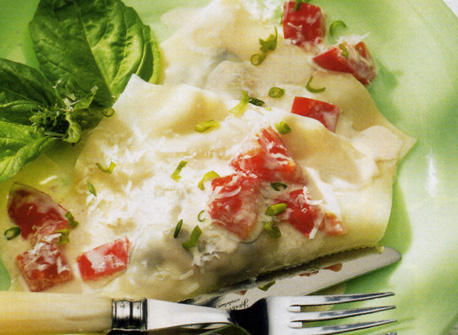
Pairing 2: Mushroom Ravioli with Tomato Basil Sauce with Oregon Pinot Noir

Why it works: Pinot is called the "chef's wine" because it goes with a lot of different foods. I absolutely love it with mushrooms because both are so earthy. They bring out the best in each other, and the sensation is a really woodsy, dark earth flavor -- which I love (MC Ice hates mushrooms so this is his own personal hell, BTW). If you are grossed out by eating potting soil, the other components in the dish come to the rescue: the starch will help absorb the fruitiness of the wine and the tomato sauce is acidic and brings out the acid in the Pinot. The sensation is something earthy yet fruity with mouth cleansing acid that makes the dish taste fresh, not heavy or like eating dirt.

Pairing 3: Beef Tenderloin and Roasted Portabello Mushrooms with Bordeaux (Cabernet Sauvignon & Merlot blend)
Why it works:
Beef tenderloin is just that -- tender in texture. It's soft protein and delicate yet still beef. Portabello mushrooms are the non-red meat eater's (I am a non red meat eater, FYI) analog to all things beef. Here, the classic pairing just works. Bordeaux is complex, with strong tannins that can work with the protein to make the texture of the meat less dense. The wine adds complex flavor (black fruit, tobacco, leather, cedar notes) to the meat's simpler preparation and the meat will soften the tannin of the wine as it's absorbed into the cut. The result is a satiny, soft texture that neither the wine nor the food will have on its own.

Pairing 4: Chocolate Fondue and Banyuls from the South of France
Why it works:
Let me be honest here, everyone has a different palate, but I thin
k the marketing ploy of pairing Cabernet and chocolate is horrible. The wine AND the chocolate taste bitter to me when I have them together and I need coffee to trump them both. That said, I have a massive sweet tooth and I love wine, so I found the perfect solution in this pairing. Banyuls is rich and full-bodied, and is made like Port. Fermentation is halted by adding brandy while there is still sugar in the wine. The finished product is sweet and alcoholic but in this case more delicate than a Port.

Usually dessert wine tastes best when it's sweeter than the dessert, so in this case we've got total perfection. The cho
colate makes the Banyuls taste like black plum, raisin, and black cherry and the Banyuls makes the chocolate taste like orange and espresso. No bitterness, just enhancement from the sweetness and the fruitiness of the wine with the choco.

I'd love to hear from you about good or bad pairings you've had. We'll try to dissect them and figure out why they worked so you can get more good pairings together, or why they didn't so you can avoid bad ones! Readmore »»
Thursday, July 15, 2010

My Wine and Cheese Pairing Featured in The Travel Connoisseurs

A quick post to let you know that I've been featured in a great article: "Top 10 Best Wine and Cheese Pairings" in The Travel Connoisseurs, an amazing site that features "cocktails, cuisines, accommodations, and travel tips."

Thanks to Lee for including me in this piece!


PS -- Friends may recognize the lovely scene next to my suggestions from a certain Atlanta porch. MC Ice is a great amateur photographer! Readmore »»

Monday, February 15, 2010

A Valentine's Delight: Sparkling Pinot Noir and Yummy Appetizers

Last night, my wonderful and adoring husband took me out for a lovely meal at Dogwood Restaurant here in Atlanta. It was delightful, but we both agreed that the best part was the Gloria Ferrer, Blanc de Noirs, Sonoma, a bubbly made from Pinot Noir, paired with our appetizers:


Hand torn butter lettuce salad, buttermilk dressing, tartufo cheese
Butternut squash soup with local honey, creme fraiche, toasted walnuts


The bright acidity, effervescence and strawberry, yeasty flavors of the sparkling wine (remember that you can only call sparkling wine Champagne if it's from the region in France), were a perfect contrast to the creaminess of the dressing. Tartufo is an Italian sheep and cow milk cheese with truffle shavings mixed in, so it's very earthy. But the bright fruit of the wine tempered the tang of the truffle flavor and the cracked pepper on the salad just danced with the bubbles to provide a lively, harmonious sensation. It was so good that we ordered a second glass and a second salad!


The butternut squash and honey soup with the Blanc de Noirs was a different, yet equally gratifying experience. It was creamy, warm, earthy, and sweet. Alone, it would have been delicious, but the berry essence of the wine made the soup burst forth with fruit and honey flavors while the acidity prevented the sweetness from sticking around in your mouth. The wine was a perfect complement to the creamy deliciousness of the soup and acted as a wonderful palate cleanser between bites.


I find that people frequently forget about bubbly when they are thinking about food and wine pairings, so I thought I'd share our experience, and encourage you to experiment with sparkling and food too. Surprisingly, these wines are very versatile and can even hold their own against certain red meat preparations. So don't be bashful -- it's worth a go! Readmore »»

Friday, October 16, 2009

New Post on BlackBook Magazine's Entertaining At Home Section...

A short link today to my post on a very cool site: BlackBook Magazine.

The topic: Pairing wines with weeknight food. Check it out now!
http://www.blackbookmag.com/nightlife/entertaining-at-home


Readmore »»