Tuesday, November 2, 2010

The greening of Oddbins

I’m old enough to remember when Oddbins was the most exciting wine store on the high street. Back in the seventies when supermarket wine ranges were terminally boring and wine merchants the pompous, pin-striped suited caricatures of legend Oddbins shone like a beacon of light with its offbeat listings and quirky Ralph Steadman-illustrated wine lists. It put Australia on the map and then Greece (remember the Greek wine range?) And then it all went horribly wrong ending up under the ownership of Castel Frères, owners of the nondescript Nicolas.

When it was rescued a couple of years ago by Henry Young and Simon Baile whose father had run the business in the early days I must admit I still wasn’t convinced about the direction the chain was going in. The shelves were still pretty dull. There was a half-hearted flirtation with natural wines which no-one in my local branch had ever heard of but suddenly - judging by yesterday’s press tasting - Oddbins has a spring in its step and is stocking the sort of wines that made its reputation. And believe it or not almost half of them are organic or sustainable.

It’s obviously a personal passion for head wine buyer Richard Verney (above) who sees it as his mission to make this the point of difference between the company and their rivals. And is clearly sincere about it rather than seeing it as a marketing ploy. The difficulty he sees is how to present it to their customers - whether to talk about organic, sustainable or natural wines.

"It’s not always straightforward" he admitted to me yesterday. "Some of our producers are effectively organic but not certified. I was talking to a Muscadet producer the other day and she said ‘Look, we’re in a marginal area. I need to reserve the right to use sprays as a last resort.” You can understand that - they've got to make a living. And there are certain aspects of the organic movement I’m not 100% happy about if it means organic stops as soon as the grapes are picked. We need to think what our attitude is to additions of sugar and acid and what is acceptable and unacceptable. How wine travels to us - the stuff that comes in on a truck from Europe may be more ecologically unfriendly than wine that comes in by container."

But he’s convinced that ‘greening’ Oddbins is the right move. "The next thing in wine has always been a new region but I think it’s now going to be a new attitude."

"I go to Borough Market every Saturday and see people who are obsessed with the food there and wonder where they’re buying their wine. Most people still see wine as a factory produced product rather than an agricultural one - we’d like to change that."

The detailed notes on each wine presented at the tasting illustrate that Verney is serious about his intention. The return of the old ‘odd bins’ philosophy means that many of the most interesting bottles will only be available in selected branches and small parcels. Which is fine - you'll just need to get in quick. I’ll post a couple once I’ve checked availability.

December 21st: Sadly for Oddbins it's just been announced that Verney has left "to pursue new challenges" so I wonder if they'll sustain this momentum. Readmore »»

Recap: A Visit To Honig For Some Great Sauvignon Blanc and Cabernet Sauvignon

You may have been following me as I did my Tour de Wine Country last week/the week before. I had an awesome time, met some fabulous peeps, and best of all learned a ton of new stuff.

Today I'm going to recap my visit to Honig, somewhat of an institution in Napa and best known for a kind of un-Napa variety -- Sauvignon Blanc. No one does it better than Honig in that Valley and no one can beat the value (it's $16, probably the most competitive of all established Napa wineries for any wine!).

We arrived a little early for our 10 AM appointment (Honig sees guests by appointment only but they are completely normal about it and if you just call ahead they'll hook you up). It was a nice day and the vineyards surrounding the very naturalistic-looking tasting room still had some grapes hanging around. I tasted a few and think they were Merlot or Cabernet Franc -- they seemed lighter in flavor and didn't have the snappy bite that Cabernet Sauvignon has even right off the vine.

After tasting and approving the raw materials, MC Ice and I headed into the tasting room and Mark, a very nice dude from the Midwest, took us through a tasting of four wines (I was so happy that they didn't offer 8. Some folks got REALLY excited in showing their stuff and over did it on the tastings -- I was trying to find ways to politely refuse after a while...story for a future post). Mark also gave us a little background on the winery.

Honig is located across the street from the famous Cabernet Sauvignon producer, Caymus. Caymus sold the property in 1964 because they were looking to divest their vineyards in favor of buying grapes from growers (a good business strategy for lowering your risk. If you don't own the vineyards you don't get stuck with bad crops and then you can pick from the best of the best of the growers with whom you have contracts).

Around the same time, Louis Honig was a rich San Francisco professional (ad exec) looking to realize his dream of starting a winery (this is a typical Napa story, BTW -- "Rich Person Buys Winery." Have you ever heard the joke -- "how do you make a small fortune in wine?... You start out with a big fortune..." It's true and this is why all the folks who start wineries are independently wealthy). He bought the property but I guess remained too busy playing out his "Mad Men" life to make the whole wine thing a priority. He sold grapes to farmers rather than producing the good stuff.

Fortunately, the dude had some ambitious kids and after he died, in 1980, they hired a contract winemaker to whip up a small vintage of Sauvignon Blanc in his honor. They knew they had something good on their hands, so they entered the wine into the Orange County Fair and the wine won a Gold Medal. Demand shot up and the Sauvignon Blanc became Honig's flagship. They followed it up with a Cabernet Sauvignon and the winery was on its way to greatness.

Today Honig, which means honey (hence the bee on the label), has an amazing winemaker, Kristin Belair, and is run by Louis's grandson, Michael Honig. Both came to hang out during our visit and were nothing but hospitable and super open to questions, comments, hearing about Atlanta, the blog, you (the readers!) etc. You can tell that they believe in what they do, have a ton of pride, and really enjoy their lives. Who could ask for more?

I picked Honig to visit because they make affordable wines that you can actually find in a store. Also, although super-different from my much loved New Zealand and French Sauvignon Blancs, they do make a really unique style in this variety and it is delicious in its own rite. I don't know if I had even ever had their Cabernet Sauvignon, but I was pleasantly surprised by that too (although the ones we had were pricey, they're good to know about for a little splurge).

So here was the lineup:

Wine 1: 2009 Sauvignon Blanc
The grapes for this wine are sourced from all over Napa Valley, which I think in this case is a good thing. The winemaking team then gets to choose the best of the best grapes and since I don't think all parts of Napa are great for growing Sauvignon Blanc (if it's too hot the vine gets overgrown and the grapes are flavorless and bland), having a choice of grapes is a positive thing. It only works to do a vineyard or site specific wine if the grape historically grows really well in a place and makes wines that are distinctive because of that. That's not the case here.

Price: $16.00

Color:
The wine was super light -- a pale straw or platinum color. I'd had these wines before, but in Napa there is always a danger that someone might put a Sauvignon Blanc in a new oak barrel and give it smokey, 2 by 4 (wood) qualities that I hate. The lighter color told me right away that oak was not a factor (oak darkens white wines). Sure enough, Kristin told me that the wine was fermented in stainless steel and then put in neutral oak (meaning it gives no flavor to the wine) for 3 months.

Smell: Very cool. Unlike the bowl of grapefruit that I usually get with Sauv Blanc, this smelled like a bridal bouquet! There was some peach and lemon, but mostly the overwhelming scent of white gardenia, jasmine, and other white flowers were prevalent. Delicious.

Taste:
The wine had a lemon-lime/limeade flavor to it and was just a dash sweet. It tasted more like grapefruit than it smelled, with some lychee fruit too (go try one if you have no idea what I'm talking about. Their texture reminds me of brains, but don't let that stop you!). It had bold acid, which I want in a Sauvignon Blanc, but was smooth and creamy. The creaminess was from the Semillon added to the wine and the fact that Kristin left the wine to age sur lie for 3 months in an oak barrel.

[Sur WHAT? I'm trying to figure out how to explain this without it sounding gross, but I can't so here goes. After the yeast kill themselves by greedily eating sugar and changing it into alcohol during fermentation, they settle to the bottom of the vat in which it was fermented. If you leave the wine on the dead yeast, they break down a little and create a creamy flavor. Lots of white wines are aged this way to give them more depth and dimension (if you think this is nasty, you can't drink Champagne any more so just get over it!!!)]

Drink or Down the Sink?
Love it. Top choice in Napa Sauvignon Blanc. This is a great one especially if you are easing into Sauvignon Blanc from Chardonnay or Pinot Grigio. It has some of the punch from the acid and grapefruit, but isn't a bowl full of burn like Sauv Blanc from elsewhere. Keep this on your list of great whites!

_____________________________________________________________
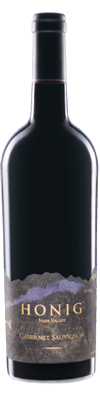
Wine 2: 2007 Napa Valley Cabernet Sauvignon

Price: $40

Color: The wine was kind of like a berry punch color -- a light ruby. It seemed from first glance that it would be a lighter style but then when I looked again and twirled the glass around, I noticed that it was staining the sides. Lots of pigment usually equals lots of flavor...

Smell: Yum. This was the perfect combination of blackberries and potpourri. There was an undercurrent of warm cinnamon spice too and I thought it smelled a little like fresh dill (not pickle-y though). The dill aroma was probably because the wine was held in some American oak barrels for 18 months (they used some more subtle French barrels too). American oak can put powerful flavors in the wine -- dill is sometimes one of them.

Taste:
This was a subtle wine, in a good way. It tasted like blackberry and black plum, but it wasn't goopy or jammy like some Napa Cabs can be. There was a little flair to the wine -- it tasted like leather, herbs, and like baked biscuits. I just loved that it wasn't overdone.

Drink or Down the Sink? Drink. We bought a bottle of this, and since it's distributed pretty widely, you may want to pick up some if you catch it on sale or have a few extra Hamiltons/Euro/Sterling laying around. It's rare to find Napa Cabs at this price point (I personally think that's because most of them are overpriced, but story for another post) and especially one that's complex, interesting, and can go with food.

_____________________________________________________________
Wine 3: 2006 Bartolucci Vineyard Cabernet Sauvignon
This wine is sourced from a small vineyard which is at the base of Springer Mountain in Napa. Mountain fruit is generally prized because it doesn't get quite as much heat as fruit growing in valleys -- the cooler temperatures allow the grapes to ripen more slowly so they maintain acid and develop more secondary flavors that make the final product interesting.

I had a little trepidation on this one though. I'm not a big fan of the HUGE Caymus style and Mark told us that this vineyard used to be used for that winery's Special Select...

Price: $75 (only available off their web site and in the tasting room)

Color:
The wine was a dark garnet (brownish red) color. On a swirl, the thick legs (I expected high alcohol) were tinted red on the way down the glass. I expected a big wine.

Smell: Like blackberry jam with mint, nutmeg, and cinnamon. There was a lot of aroma jumping out of the glass.

Taste:
Even though the wine is four years old, it needs some time to chill out. The tannins were kind of harsh, it just didn't deliver on the jamminess in the nose. That said, I can tell that with a few more years, this will be a blockbuster with blackberry, spice, and green pepper notes that are quintessential Napa Cab qualities. I'd like to try it again in a year or two to see how it's changed.

Drink or Down the Sink?
I covered this in taste...sorry. It's a well made wine, but it needs time. If you want something to drink now, get the '07 Cab -- it's ready! This one needs some more time in a dark, vibration-less, medium-humidity room. If you've got patience -- buy it and hold it. I think you'll be happy with the results.

_____________________________________________________________
Wine 4: 2008 Late Harvest Sauvignon Blanc
You probably already know this, but 99% of the time you see Late Harvest on a wine, it means it's going to be a sweet wine.

But it doesn't always mean that the wine will have a tangy beeswax quality that this wine had. Why? (Brace yourself, this is another disgusting winemaking technique -- it's not all glamour and glitz...) Wines with that quality are infected by a fungus called Botrytis (bo-TRY-tis) that raisins the grape and, if picked at the right moment, can create complex, fascinating sweet wines. According to Kristin Belair, the Sauvignon Blanc used for this wine is grown near the Napa River and nearly every year the grapes are infected, so Honig has access to great raw materials.

Because I can't help myself, I'll point out something that I found a little odd before I tasted the wine. Arguably the best sweet wines in the world are made in Sauternes and Barsac, areas of Bordeaux where the grapes get "noble rot" (as the fungus was more delicately termed for marketing purposes) very easily because of the climate. They are generally a mix of Semillon and Sauvignon Blanc, with the former taking the lead role (like 75 - 90%). I thought it was interesting that Honig chose to do a sweet wine with Sauv Blanc as the lead. Just sayin.

Price:
$55


Color: It was yellow, but usually sweet wines are very dark, rich, and golden. This -- not so much.

Smell: It was a lighter smell than what I expected. Peach, orange, and candied lemon were there. A little beeswax and honey too. Pleasant but not as aromatic as I would have thought.

Taste:
I'm going to put out there that I'm not a huge sweet wine connoisseur. I like the stuff. I enjoy a high quality Port, Sauternes, or sweet German Riesling, but I am only half as conversant with these wines as with the rest of the wine family. Why? I don't drink them that much. That said, although this was a good dessert wine, for me it didn't have the multi-layered flavors I like in dessert wine. It had a nice touch of acid, since you can't eliminate that from Sauvignon Blanc, and it tasted like apricots, oranges, vanilla, and honeycomb. I liked the wine but I didn't love it.

Drink or Down the Sink?
If you're a sweet wine person, you'll love this. If you are picky about your sweets, you may just think it's ok. Definitely a DRINK, not down the sink though! It's like orange tea with honey -- nothing to dislike here!

_____________________________________________________________
I owe a BIG thank you to Honig for hosting me and for their kindness and generosity with their time and their wines. Mark, Mike, and Kristin were phenomenal and I would recommend that you go any time!

It was the opposite of what I'd expect in Napa -- no snottiness, no pretense, no adult Disneyland antics or gimmicks, just a family and winery that strives to make good wine and succeeds.

Readmore »»

Monday, November 1, 2010

Patrice Lescarret’s Dencon

Dencon sounds a bit like a DIY product - not the most appealing name for a wine but it’s named for a reason. The producer Patrice Lescarret of Domaine Causse Marines isn’t allowed to call this wine Gaillac because it’s made solely with the local grape Ondenc which isn’t officially recognised in the appellation. He therefore had to call it a vin de table but couldn’t put the vintage on the bottle so had to number it 7002. The hoops natural winemakers have to go through . . .

It’s unsulphured, unfiltered, unfined, made with natural yeasts and without insecticides or herbicides - in other words uncompromisingly ‘natural’

We picked it up a couple of years ago when we were in Cahors just as we started to get into natural wine and it’s been down to the Languedoc and back to England, finally sitting in our cupboard for about 15 months. Not ideal, we now realise though it’s survived remarkably well as we discovered when we opened it on Saturday night.

It has the typical richness of an artisanal Gaillac white (quince seemed to me the predominant fruit) with the minerality that is characteristic of many natural wines - a lovely wine to drink at this time of year. I seem to remember an extra lushness when we tasted it in Cahors though. I suspect it would have been better if we’d drunk it sooner after we brought it back however it didn’t need to be decanted.

In the UK Green and Blue sell the 2006 vintage for £20. In France it is stocked by VinNatural.fr and Vin Etonnants and in Australia by Terroir Wines. In London you can drink it at La Trouvaille.

Suggested food matches include foie gras (inevitably in that part of the world, though it hardly seems very natural) tagines, curry (which I think would have to be quite mild) and matured goats cheese. I like the idea of trying it with skate - or other fish - with brown butter . . . Readmore »»

Sunday, October 31, 2010

Should natural wines be more consistent?

I’ve been giving a lot of thought to my colleague Wink Lorch’s comment on my first post about lack of consistency in natural wines. Not least because we took along a bottle to an event last night which wasn’t showing at its best. (We decanted it into a jug and it was fine half an hour later but that wasn't much consolation to the people we'd poured it for. I’ll come back to decanting another time.)

Expecting wines to be consistent is a comparatively new thing of course. Thirty or even twenty years ago we all talked about vintages and expected wines to be different every year. Then wine became more marketing-led and we expected our favourite brand to deliver the same flavours from one year to the next. Of course champagne is made exactly that way, blended to achieve a consistent product.

Natural wines aren’t like that. The natural winemaker doesn’t have the battery of ingredients the commercial winemaker has at their disposal to make up for nature's deficiencies and so the wines can be, yes, quite different, sometimes disappointingly so.

We don’t expect consistency in food though, particularly if we buy organic produce. Yesterday I was at a cheese fair tasting artisanal cheese which tastes different at different times of year. Fruit can be more or less juicy depending on the weather while it’s ripening. Apples may crop more or less heavily from the previous harvest - and be different sizes. Lambs will taste different depending on the time of year they’re born and how old they are when they’re slaughtered.

When I go to the hairdresser I don’t get exactly the same cut every time. If I go to a gig the band they may well play my favourite numbers a different way.

We accept variation in other fields so why not in wine?

* One thing I would admit though. It’s a more hit and miss process ageing natural wines. The wine we drank last night - Hurluberlu St Nicolas de Bourgeuil from Sébastien David would have been better drunk within 3 months of purchase when it would have had more of a chance of retaining its youthful vibrancy. And not bottled in a screwcap bottle which I suspect doesn’t do much for natural wines. Readmore »»

Friday, October 29, 2010

A Little WFNP on Web TV -- Catch My Debut!

Ok, so it's just web TV and I couldn't really let loose...but here's a bit of me live on a local Web channel, Friday Girl TV.


Even though I kept a poker face (kind of), can you tell which wine I had a hard time keeping down? I could barely contain the contempt.

Hopefully you don't hate this one. I'm trying to convince my producer friend that we NEED to do a Wine For Normal People YouTube Channel and I'm counting on you to watch (I promise it will be less scripted!). Readmore »»

Why drink natural wine?


Or, more to the point - why devote a whole blog to it? It’s a long story. My husband got into natural wine a couple of years ago and I have to say I was rather sniffy about it. I thought most of the reds I tasted were unappealingly rustic and a lot of the whites tasted of cider.

As the months have passed - and we’ve identified better producers - I’ve come round to it, discovering wines that have an incredible intensity and purity - and which don’t leave you wrecked the next morning. Most are produced organically, some biodynamically but the key thing that defines them as natural is that the producer uses a minimum of sulphur and other additives during the winemaking process.

The big difference I’ve found is that I don’t feel like going to sleep after I’ve had a couple of glasses - something I attributed to the high levels of alcohol in many modern wines but I now believe to be due to the high levels of sulphur they contain.

I’ve also discovered a whole array of new flavours in wine - not always attractive, admittedly. Natural wines tend to be tremendously varied and don’t always taste of the grape variety they’re made from. I’ll explore these and other criticisms over the coming weeks and months.

They’re also, of course, more expensive than the wines I feature in my other wine blog Credit Crunch Drinking which I'm aware will put some of you off but I hope to persuade you that they're worth it. Drink better, drink less is my new mantra.

What has triggered this blog is that we went on a fascinating trip through France last month, driving down through the Loire, through the Languedoc and up through Burgundy during the course of which we met a lot of remarkable winemakers I don’t have room to write about elsewhere.

By and large they’re one man (or woman) bands trying to sell their wine without the marketing budgets of large corporations and often without the support of their regulatory authorities.

There are also many independent merchants now specialising in wines from natural winemakers and other small producers who may not have taken the trouble to get organic and biodynamic certification but whose wines have a real sense of place. I plan to write about them too.

This is still a journey of discovery for me. I won't pretend I know much about the technical side of winemaking. I'm not an MW (Master of Wine) but I'm a passionate wine enthusiast who wants to see small winemakers and shops survive and flourish in these hard economic times. As I hope you do too. Readmore »»

Sunday, October 24, 2010

Day 2: Another Stellar Day in Sonoma!

It was our last day to tour Sonoma, so we managed to fit in 5 places and most of them pretty great and places that I would recommend.

It rained like an MF all day and my cute Target leopard print flats were soaked (good thing they cost $10...oh how I love Target!), but we had fun. MC Ice and I never let weather stop us from having a good time and yesterday that was a fortunate attitude to have!

11:00 AM: Bella

A few years ago, a friend who has a similar passion and palate to me told me about this very cool property in the Dry Creek Valley. They were known for outstanding, big Zins and no one did it better than they did.

I saw her on Friday and told her I was heading to our mutual favorite haunt. She got a funny look in her eye and then warned me that there had been some changes that made her drop out of their wine club. She didn't elaborate, just said that she wanted to know what I thought. I had to go check it out.


Urgh. Bella is, by far, one of the cutest properties in Dry Creek. It has a two-part tasting area -- in a barn and then in a beautiful mountainside cave. The hospitality is amazing and the people are so kind...but the wine is not what it once was. It's the winery's 10 year anniversary and apparently they haven't upped production (it's around 7,500 cases), but the wines are completely different. They've added a Chardonnay from the Russian River Valley (which, honestly, was the best wine of the day -- lightly oaked, acidic, very refreshing) but their Zins hail from the same vineyards as in the past.

Sadly, these are not the same Zins. They lack the jammy fruit, the complexity, the rich spice, and the velvety texture that I loved in their Zins from years passed. They used to be like mini-Turley Zins (really famous, expensive but sinfully delicious!). I'm not sure if it's a vintage issue or if there's been a philosophical change, but the big, delicious, California-identity Zins that I knew are no longer.


I'd send people here for the hospitality and the property, but no longer for the wine. I just hope the winemaking goes back to the way it used to be someday.

12:15 PM: Michel-Schlumberger (pronounced Michelle Schlumber-JHEY)

Ok, you guys were the ones that told me to check this place out and I've got to say a BIG thank you. It rocked! The wines are 100% organically grown, mostly from the estate surrounding the property in the Dry Creek, and they are excellent. The hospitality was terrific too -- our down-to-earth, passionate, but no nonsense educator, Samantha, kicked ass and we had a great time!

Each wine was elegant, restrained, and versatile -- you could drink them alone but they'd be fabulous with food too. It's hard to pick out favorites, but the Merlot was amazing (especially for $25), their special reserve Cabernet called Deux Terres because the grapes come from two soil types was complex and delicious, and their Syrah, mixed with some Viognier in a Northern Rhone style was nothing short of stunning and left me speechless and wanting to drink more.

With a remote location and a Spanish-style winery that was pretty and welcoming, I'm a Michel-Schlumberger lover! Thanks to to readers who pointed me in that direction. Good call!


1:15 PM: Lunch at the Dry Creek General Store
Good food, expensive, owned by Gina Gallo, FYI. Although your wallet will feel much lighter, it's an awesome place to stop for eats because it keeps you local. Instead of going to Healdsburg or Santa Rosa, you stay within the vineyard area so you don't lose travel time. I recommend it highly!


2:00 PM: Sbragia

Another reader suggestion, this was a great winery. It's a family owned winery, run by a father and son. The father, Ed Sbragia, is a long-time winemaker for Beringer (but don't think ill of him, Beringer's reserve wines are off the chart delicious, FYI).

The tasting room was mobbed, but they still managed to do some hospitality for this pop-in blogger and we were in no rush, so it was just fine. It's a gorgeous property that overlooks a giant dam and if it had been a sunny day it would have been a great place to stay for a while and enjoy the amazing outdoor patio (with fun games on it) and the fabulous view. The rain prevented us, but we'll be back again to enjoy it!


Sbragia is known for Zin and Cabernet. The Zins were just what I like from the Dry Creek -- fruity, spicy, and liked a baked berry cobbler. The highlight for us was the Italo's Zin, made from 50 year old vines. We didn't taste through their whole Cab lineup, which included a lot of Napa Cabs, but we did sample the Monte Rosso Cabernet, from a really great old vineyard which I'll share more about in a longer post. It was a great wine and very well made, so I assume the rest of their Cabs would be solid too.

Thumbs up for Sbragia.


3:00 PM: J. Fritz

Another off-the-beaten-track winery, this one is way off a random road on the way to Geyserville. We found it a few years ago and were excited to go, but also nervous, given the changes that we found at Bella.

Whew! Fritz hasn't
changed a bit. Around since 1979, the winery is in a giant cave built into a hillside. It's 200 feet deep and 5 stories high -- they use no air conditioning to cool their cellar and they use gravity flow to push the wines through from delivery to production. Very neat.

Even better, they make great wines. A unique Sauvignon Blanc that tasted like a mango, a very typical Russian River Valley style Chardonnay (not my style because of the oak but very well made if it is your style), and then we moved on to their jewels in the crown. Fritz does red and does it WELL. Their Zin was solid, and their reserve Cabernet was sinfully delicious. I love that their wines are alive -- saturated with flavor and full of complexity.

The one thing that wasn't being poured but which I know about from being there before -- they make a small quantity of lights-out Syrah. We snagged two bottles and will hold them for a year (check out my review of the Syrah from last year -- it is amazing).


4:30 PM: The Natural Process Alliance

Ok, so to end the tour, I wound up back where we started: in a warehouse in Santa Rosa. But
this time it was to see my old pen pal, now materialized friend, Hardy Wallace of Dirty South Wine fame. The man and the legend is one of the kindest, most passionate people I've met and I was honored to have him host me and MC Ice at this VERY cool winery. What is the NPA? From them...
"We believe that expressive soil is sacred, responsible farming is a requirement and natural winemaking is the only option. In the creation of wine, there are innumerable natural processes that are elegant in their simplicity and astonishing in their effectiveness. Our role is but one of these processes and is no more significant than any other. We have joined a natural alliance that has been ignored for far too long."
If that doesn't make sense -- I'd say the philosophy is that they don't monkey with the wines at all. There is a head winemaker, two other full-time employees (including Hardy who helps make, market and sell the wine!), and a few interns who make wines with as little human intervention as possible. NPA wines are all white and are not bottled, but sold to people and restaurants in aluminum canteens -- which are meant to be refilled. The wines aren't sold anywhere outside of a 100 mile radius of the winery and you can expect these white wines to be cloudy and kind of orange-pink from skin contact. They are fresh, natural, and awesome. Once a week Hardy goes to San Francisco to drop off new canteens and pick up the old ones (he said he's the wine milkman -- he delivers the canteens in wooden crates that are like the old-school milk crates!). He's selling to some of the top restaurants in San Francisco, who love the wines.

The reds are bottled under the Salinia brand. We tried the Pinot Noir and a Syrah. Each were very natural and tasted like the grapes and land from which they come. This is a completely different style of wine, incomparable to anything else I've had. This is what wine tastes like before it is refined by winemakers -- very cool. I'll elaborate in a future post.

6:30 PM: Dinner at Stark's with Rick Breslin of Hello Vino.
We ended the day with a phenomenal dinner at Stark's in Santa Rosa with Rick Breslin of Hello Vino fame (if you don't know about this application -- get on it! It's a pairing and wine recommendation engine for normal people!) and his lovely wife. We had a wonderful time and were so happy that they trekked all the way from San Fran, in the rain, to be with us and share some laughs and great food!


So now we take a few days off and follow another passion -- hiking! It's off to the north for us, up to Humboldt County and Trinidad to see the redwoods. We'll be back tackling a few properties in Mendocino later in the week! Thanks for reading! Readmore »»