In return for our Genesis syrah our friends cracked open a bottle of Domaine de Vougeraie's Fête de Famille 2002 an exceptional crémant de Bourgogne (at an eyewatering price - £51.05 a bottle)
It was really interesting - much richer, fuller and more savoury than champagne. More of a food wine - I could have imagined it with veal or even a roast chicken.
The estate is registered organic and in conversion to biodynamic viticulture.
There was a sneaky little Dom Perignon-style shield on the label which I suppose should encourage you to feel it's a bit of a bargain but I don't think it's really worth that kind of money. Cheaper than their basic Burgundy though if that's any consolation . . .
Readmore »»
Monday, February 7, 2011

Sunday, February 6, 2011
Castagna Genesis Syrah 2004 - a thrilling Australian red

I've been waiting for the right occasion to try this wine, which is part of the prestigious Langton's classification and last night we found it: we took it with us to dinner with a couple of friends who are really into natural wine*.
We weren't disappointed. It was simply sensational taking me back to the early days when I first tasted Aussie Shiraz and was just blown away by the intensity of flavour.
It's not called shiraz, mind you, but syrah by winemaker Julian Castagna of Beechworth in Victoria who farms his estate biodynamically. It apparently contains a proportion of viognier which suggests a desire to pay homage to Côte Rôtie.
It certainly has some of Côte Rôtie's exotic character - wild red fruits and violets - but then there were some unmistakably Australian notes in the liquorice, pepper and even a touch of tar. The freshness and acidity were surprising though and it wore its 14% alcohol very lightly. I would describe it as juicy if that hadn't become so debased as a tasting term. The fruit just went on and on.
It went very well with a braised leg of mutton but would have been great with pretty well any red meat.
The downside? It isn't cheap: £40 a bottle from The Wine Society. But if you think you could pay that on a wine of half the quality in a restaurant it doesn't seem quite so stiff.
Castagna btw is one of four Australian producers who are taking part in the Return to Terroir tasting at the Melbourne Food and Wine Festival next month.
* Out of interest the wine was drunk on a Flower Day. Readmore »»
Friday, February 4, 2011
Wine For Normal People Radio: Episode 005 Aging Wines
 Episode 005 Aging Wines -You Gotta Know When to Hold 'em

Ok, I didn't sing "The Gambler" on air, but I did talk about when to hold 'em and when to fold 'em...in terms of wine, of course! In this episode Rick and I help explain what characteristics allow for a wine to be aged, the ideal storage conditions, and we name some wines that will age well.
In the news, we discuss Flash Sale sites and the Grape of the Week is Zinfandel (yeah we touch on White Zin too...even though I'm a bit of a hater).
Here are the links we mention in the show:
Flash Sites Article
My Video on French Oak TV on Closures
And the podcast...
In the news, we discuss Flash Sale sites and the Grape of the Week is Zinfandel (yeah we touch on White Zin too...even though I'm a bit of a hater).
Here are the links we mention in the show:
Flash Sites Article
My Video on French Oak TV on Closures
And the podcast...
Readmore »»
Wednesday, February 2, 2011
Big increase in French organic viticulture
I'm still flat out on the current book project but thought I'd post this link to a report in The Drinks Business on the latest figures on the extent of organic viticulture in France which now accounts for nearly 6% of total wine production.
More interesting is the rate at which the rate of conversion is speeding up. According to Elizabeth Mercier of France Agence Bio at Millésime Bio in Montpellier last week Languedoc-Roussillon’s organic vineyard coverage increased by 51.9% from 2008 to 2009 (the last date for which statistics are available), Rhône-Alpes by 50.8%, Aquitaine by 45.2%, Burgundy by 43.2% and Provence-Alpes-Côtes d’Azur by 34.6%.
The report points out that growth was slower in the Loire and Alsace (7.1% and 13.5% respectively over the same period) but doesn't take account of the fact that those regions already have a significant number of organic and biodynamic producers.
There are also current figures for Italy and Spain.
Whilst on the subject of France I've found a new site, Club du Vin Authentique which has a very interesting - and alarming - feature on the level of pesticides in conventionally produced wine. (In French, I'm afraid) Readmore »»
More interesting is the rate at which the rate of conversion is speeding up. According to Elizabeth Mercier of France Agence Bio at Millésime Bio in Montpellier last week Languedoc-Roussillon’s organic vineyard coverage increased by 51.9% from 2008 to 2009 (the last date for which statistics are available), Rhône-Alpes by 50.8%, Aquitaine by 45.2%, Burgundy by 43.2% and Provence-Alpes-Côtes d’Azur by 34.6%.
The report points out that growth was slower in the Loire and Alsace (7.1% and 13.5% respectively over the same period) but doesn't take account of the fact that those regions already have a significant number of organic and biodynamic producers.
There are also current figures for Italy and Spain.
Whilst on the subject of France I've found a new site, Club du Vin Authentique which has a very interesting - and alarming - feature on the level of pesticides in conventionally produced wine. (In French, I'm afraid) Readmore »»
Tuesday, February 1, 2011
Xarel-lo from Penedes: A Hard Read in Many Ways...
I guess I'm obsessed with "x" themes these past two weeks. Last week it was Bor deaux and this week, it's a crazy-ass grape that is rarely made as a standalone wine -- Xarel-lo.
First things first -- how the hell do you SAY that? There are two ways to go on this. You can say it in the native Catalan language and call it "shah-REHL-lo" or you could do it the Spanish way and call it "hah-REHL-lo." If you do it the second way, try to channel my (long deceased) Yiddish speaking relati ves and get a little phlegm roused when you say the "ha" part so it's kind of like clearing your throat and saying the syllables at the same time. Practice a little to get it right. If that doesn't work, channel Scooby Doo and try to say "hello" -- it's kind of like "Heerrro," except with an 'el' sound before the o.

Now that you can expertly pronounce it I guess I should tell you what it is. I'll start with a hint. Have you heard of Cava? Maybe you've seen the black bottle of Freixenet that's $12.99 (a pretty good deal if you ask me) that looks like a Champagne bottle? It's Spanish sparkling wine.
Cava, named for the caves that the wine aged in, is fabulous. It's like really inexpensive, high quality Champagne, because it uses the same production techniques but has a twist because rather than the French Pinot Noir, Chardonnay, and Pinot Meunier (the Champagne blend) it uses native grapes.
What does this have to do with Xarel-lo? It's one of the three grapes used in Cava, along with Parallada and Macabeu. Less sexy than its blending partners, the grape produces wine that is aromatic but wickedly acidic and is not known to be as delicate and palatable as its blending partners in Cava. It's used for a punch and a backbone.
Xarel-lo is the 6th most important grape in Spain and is native to the Catalonia region in the northeast. Most of the crop goes directly into Cava. It's the flagship grape of Penedes, a smaller area inside of the Catalonia area and a predominantly white wine region (although it makes great oaked reds, sparklers, and pink wine). The area is nestled between the coast and the interior plains on Spain's east coast. It's mild and warm -- benefiting from the Mediterranean sun and the coastal breezes. The area has an ideal climate for grape-growing.
So it's clear that Xarel-lo is essential in northeastern Spain, but to me it's always seemed like its most important role is a supporting one in Cava. Given that, I was surprised when a friend who represents the Albet i Noya brand gave me a bottle to try (there's my disclosure, but you know I'll be honest!). I'm always open to trying new stuff and have tried Macabeu bottled by itself with good results, but this was very outside the box.
Just as an aside though, before I get into the wine, a note on Albet i Noya, because they are not run of the mill. They farm on land that's had some form of viticulture since the middle ages, so this is not a new fangled venture. The family has tended the vineyards since 1903, and through hard work and saving, bought the land in 1986. It's a family operation all the way, making Cava and all sorts of still wines from native varieties to French ones to blends of the two. They seem very experimental and cutting edge when you look at their diverse selection (which left me thinking, it could be great or really out there, FYI). Regardless, they get huge props from me for organic farming and for making wine in a true organic way, without the addition of sulfur dioxide. Great effort and homage to Mother Nature!
Ok, so on to answering the burning question: "I know how to pronounce it, I know where it's from and I know about the producer, now what the hell (or should I spell it Xell?) does Xarel-lo taste like?..."
The Wine: Albet i Noya Xarel-lo (BTW - no "r" in Albet)
Where It's From: Penedes, Spain
The Grape: Xarel-lo
Vintage: 2009
Price: $14.99
Color: The wine looked light to me -- almost Pinot Grigio-esque in color. It's kind of like a bale of hay. Nothing stood out -- no big legs, no green flecks, no dark yellow to indicate oak or sugar or age...I wasn't expecting big flavor.
Smell: This is not an easy wine, meaning it's hard to get your finger on it even just when you you smell it. At first I pigeon-holed it -- the wine smelled like green plants or a green house, maybe even like a cucumber in salt water (oh, I guess that's technically a pickle, but it didn't smell pickle-y for the record). I thought -- "Ok, kind of like a bitter Gruner Veltliner" (which is a grape from Austria that is also kind of hard to get your head around). But I was wrong with my initial assessment. With more swirling around the glass and more time, there was this delicious white flower smell and then something like a buttery croissant. I kind of marveled at the inconsistency.
Taste: More surprise here that completely mirrored my experience with the smell. T he first impression of this wine was more texture than flavor -- it was tart, bitter, and acidic...but simultaneously creamy and buttery. Total extremes all in one glass. The flavors were lemony and a bit like apricot. On the third or fourth sip I realized that it reminded me of lemon curd, this expensive, creamy stuff that my mom used to buy to put on hot biscuits. The end note was very soft and creamy. I felt a little tired by the time I got to the bottom of the glass, just thinking about the wine.
Food Pairi ngs: This was not a "drink the bottle in a night" wine. Thankfully, it's got a screw cap, so it stayed fresh for 2. The first night I sipped it with nothing -- bad move. The second night I had it with brie and crackers -- much better move. Like many European wines, this is not a casual sipper. You need some light fare -- cheese, light pastas, salads, flaky white fish, or vegetarian appetizers to make this wine shine.
Drink or Down the Sink?: It's a mixed bag. If you don't like bitter in your white, I'd stay away. If you are a brooding, analytical type -- break this down and sit with it. If you're having a lighter meal, I'd say this would be good company. As for me, I'd only buy a bottle if I were serving a nice summer meal, and I'd order it by the glass in a restaurant bu, sadly, it's not going on the list of favorite little-known wines. Readmore »»
 deaux and this week, it's a crazy-ass grape that is rarely made as a standalone wine -- Xarel-lo.
 First things first -- how the hell do you SAY that? There are two ways to go on this. You can say it in the native Catalan language and call it "shah-REHL-lo" or you could do it the Spanish way and call it "hah-REHL-lo." If you do it the second way, try to channel my (long deceased) Yiddish speaking relati
 ves and get a little phlegm roused when you say the "ha" part so it's kind of like clearing your throat and saying the syllables at the same time. Practice a little to get it right. If that doesn't work, channel Scooby Doo and try to say "hello" -- it's kind of like "Heerrro," except with an 'el' sound before the o.
Now that you can expertly pronounce it I guess I should tell you what it is. I'll start with a hint. Have you heard of Cava? Maybe you've seen the black bottle of Freixenet that's $12.99 (a pretty good deal if you ask me) that looks like a Champagne bottle? It's Spanish sparkling wine.
Cava, named for the caves that the wine aged in, is fabulous. It's like really inexpensive, high quality Champagne, because it uses the same production techniques but has a twist because rather than the French Pinot Noir, Chardonnay, and Pinot Meunier (the Champagne blend) it uses native grapes.
What does this have to do with Xarel-lo? It's one of the three grapes used in Cava, along with Parallada and Macabeu. Less sexy than its blending partners, the grape produces wine that is aromatic but wickedly acidic and is not known to be as delicate and palatable as its blending partners in
Cava. It's used for a punch and a backbone.Xarel-lo is the 6th most important grape in Spain and is native to the Catalonia region in the northeast. Most of the crop goes directly into Cava. It's the flagship grape of Penedes, a smaller area inside of the Catalonia area and a predominantly white wine region (although it makes great oaked reds, sparklers, and pink wine). The area is nestled between the coast and the interior plains on Spain's east coast. It's mild and warm -- benefiting from the Mediterranean sun and the coastal breezes. The area has an ideal climate for grape-growing.
So it's clear that Xarel-lo is essential in northeastern Spain, but to me it's always seemed like its most important role is a supporting one in Cava. Given that, I was surprised when a friend who represents the Albet i Noya brand gave me a bottle to try (there's my disclosure, but you know I'll be honest!). I'm always open to trying new stuff and have tried Macabeu bottled by itself with good results, but this was very outside the box.
Just as an aside though, before I get into the wine, a note on Albet i Noya, because they are not run of the mill. They farm on land that's had some form of viticulture since the middle ages, so this is not a new
 fangled venture. The family has tended the vineyards since 1903, and through hard work and saving, bought the land in 1986. It's a family operation all the way, making Cava and all sorts of still wines from native varieties to French ones to blends of the two. They seem very experimental and cutting edge when you look at their diverse selection (which left me thinking, it could be great or really out there, FYI). Regardless, they get huge props from me for organic farming and for making wine in a true organic way, without the addition of sulfur dioxide. Great effort and homage to Mother Nature!
 Ok, so on to answering the burning question: "I know how to pronounce it, I know where it's from and I know about the producer, now what the hell (or should I spell it Xell?) does Xarel-lo taste like?..."
The
 Wine: Albet i Noya Xarel-lo (BTW - no "r" in Albet)
Where It's From: Penedes, Spain
The Grape: Xarel-lo
Vintage: 2009
Price: $14.99
Color: The wine looked light to me -- almost Pinot Grigio-esque in color. It's kind of like a bale of hay. Nothing stood out -- no big legs, no green flecks, no dark yellow to indicate oak or sugar or age...I wasn't expecting big flavor.
Smell: This is not an easy wine, meaning it's hard to get your finger on it even just when you you smell it. At first I pigeon-holed it -- the wine smelled like green plants or a green house, maybe even like a cucumber in salt water (oh, I guess that's technically a pickle, but it didn't smell pickle-y for the record). I thought -- "Ok, kind of like a bitter Gruner Veltliner" (which is a grape from Austria that is also kind of hard to get your head around). But I was wrong with my initial assessment. With more swirling around the glass and more time, there was this delicious white flower smell and then something like a buttery croissant. I kind of marveled at the inconsistency.
Taste: More surprise here that completely mirrored my experience with the smell. T
 he first impression of this wine was more texture than flavor -- it was tart, bitter, and acidic...but simultaneously creamy and buttery. Total extremes all in one glass. The flavors were lemony and a bit like apricot. On the third or fourth sip I realized that it reminded me of lemon curd, this expensive, creamy stuff that my mom used to buy to put on hot biscuits. The end note was very soft and creamy. I felt a little tired by the time I got to the bottom of the glass, just thinking about the wine.
Food Pairi
ngs: This was not a "drink the bottle in a night" wine. Thankfully, it's got a screw cap, so it stayed fresh for 2. The first night I sipped it with nothing -- bad move. The second night I had it with brie and crackers -- much better move. Like many European wines, this is not a casual sipper. You need some light fare -- cheese, light pastas, salads, flaky white fish, or vegetarian appetizers to make this wine shine.Drink or Down the Sink?: It's a mixed bag. If you don't like bitter in your white, I'd stay away. If you are a brooding, analytical type -- break this down and sit with it. If you're having a lighter meal, I'd say this would be good company. As for me, I'd only buy a bottle if I were serving a nice summer meal, and I'd order it by the glass in a restaurant bu, sadly, it's not going on the list of favorite little-known wines. Readmore »»
Saturday, January 29, 2011
Wine For Normal People Radio: Episode 004 Trendy Wines
This week on Wine For Normal People Radio...what makes a wine trendy? What wines *are* trendy right now?
Rick and I discuss the most popular wines of 2010 and which wine trends will be popular in 2011. Highlights -- some stuff on what generations are drinking what (and why I think it is BS to divide wine drinkers this way), the most popular searches in the Hello Vino application, and Pinot Noir -- the grape of the week and why the movie "Sideways" kind of ruined it.
Check it out:
 wines *are* trendy right now?
Rick and I discuss the most popular wines of 2010 and which wine trends will be popular in 2011. Highlights -- some stuff on what generations are drinking what (and why I think it is BS to divide wine drinkers this way), the most popular searches in the Hello Vino application, and Pinot Noir -- the grape of the week and why the movie "Sideways" kind of ruined it.
Check it out:
Tuesday, January 25, 2011
A Primer on Bordeaux: The 4 Things You Need To Know
What can I say about Bordeaux? I mean, we don't exactly think of it as "Wine For Normal People" material. I remember seeing it written for the first time and thinking, "THAT'S how you spell it? With an X? Weird." And then there's the issue that it just kind of sounds expensive. Wine snobs talk about it all the time and go on and on about vintages and Banks and other confusing stuff. Kind of makes you want to throw your hands up and walk away.
But here's the thing: when I first learned about Bordeaux, I was kind of surprised that it wasn't as complicated as I thought. There's a lot to know if you want to become an expert on it, but once you get a few basics under your belt it's really not that bad. Right now you're thinking that I'm full of s*&t, but I'm really not. I promise.
I think 4 basic points should make you feel like you've got a handle on it: the grapes and wine styles of the region, geography, the importance of weather (vintage), and the prominence of producers in the region. Then I'll tell you about an awesome wine I had last night from the region and how it rocked my world.
First a quick preface that I pulled off the Web from Bordeaux Conseil Interprofessionnel du Vin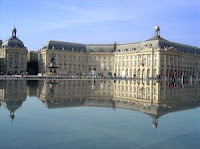 de Bordeaux. I'm citing facts because I don't think they're so boring and they help answer the question: "Why is Bordeaux such a BFD?":
If you were wondering what part of the hype was...that should give you a good start. Wine in Bordeaux is big, big business and it behooves the Bordelais to keep quality high...and most of the time they do.
Now for 4 basic things about Bordeaux that can serve as a cheat sheet:
1. Gra pes and Wine Types
Ok, so it's not as easy as Burgundy, where there are really only three main grapes to know (Pinot Noir, Chardonnay, and Gamay), but Bordeaux deals mainly in 8 grapes...3 whites and 5 reds:
So now you'll know that when you see a bottle of Bordeaux, it's a blend of the grapes above. It will be similar each time you get taste it, with variations, but now you know the recipe, so hopefully you'll feel more confident picking it up.
2. Geography
I'm not going to be too detailed on this, because there are 60 appellations or different areas with kind of distinct wine styles in Bordeaux.
 Bordeaux’s name actually originates from the French phrase “au bord de l’eau,” which means "along the water." It's not just some romantic name -- the area does actually lie along the banks of three rivers, the Dordogne in the north, the Garonne in the south, and the Gironde, into which both flow and which flows into the Atlantic Ocean.
From a climatic standpoint, the area is pretty ideal. The warming maritime influence of the rivers, along with a pine forest in the south helps protect this otherwise very exposed area from the tumultuous weather and severe frosts that often come in winter. From a geological standpoint, the rivers are a dividing line for the types of grapes that grow best on each side of the river. And here's where the whole "Bank" thing comes into play -- banks just are sides of the river.
There are three main areas of Bordeaux:

I am an animal lover, so I hate to beat a dead horse, but I will say it again: grape growing is agriculture. Some years Mother Nature is kind, some years, not so much. In years where it all works, prices rise and wine geeks get excited. If you pay attention to weather conditions, then you’ll understand vintage – very simple but something people love to complicate.
With that horse flog ged, a note on aging. Bordeaux are known for their age-ability. A good Bordeaux from a good year can age for decades because the tannins in the wine act as a natural preservative. Over time, the tannins loose a lot of the “fight” in them as the remain in an anaerobic environment, and mellow. That means that older wine tends to be softer, and have more complex flavors, as the chemical compounds change over time and combine with the other elements in the bottle.
Can all Bordeaux age? No way. Young white Bordeaux should be consumed within a few years and less expensive red Bordeaux is meant to be consumed within 5 years. Don’t hold onto it unless it’s of high quality, or you’ll lose the enjoyment it can offer you now. Not all great wine has to age!
4. Classification Systems
Ok, the final and most complicated point: Bordeaux, more than any other area, is obsessed with classifying its Châteaux by perceived quality. There are three main classifications that have been done in this large area, and none are without controversy. They are: Graves, St-Émilion, and most important..the 1855 classification.
What's the 1855 Classification? In 1855, Napoleon III requested a ranking of wines of the region from best to worst for his Exposition Universelle in Paris. The result: A ranking of the Châteaux by the price they fetched. A simple demand-driven strategy, and not entirely foolhardy, there were 61 wines classified into 5 growths/levels or “Cru.” Four Châteaux were at the top and the rest fell in the other 4 buckets until a price point was reached that they didn’t feel was worthy of classifying.

Huge controversy erupted that still exists today because all the Châteaux were on the Left Bank, and most were in the Medoc area – the entire Right Bank was shunned, as were other parts of Bordeaux that churn out amazing wines. To complicate issues further, since 1855 only 1 change has been made (Château Mouton-Rothschild was elevated from a second to a first growth) even though Châteaux have changed hands and quality has ebbed and flowed. Nevertheless, the top 5 Cru still garner the highest prices and are considered some of the best wines in the world. History reigns supreme on this one.
____________________________________________________________
So those are Bordeaux basics. Here, the Châteaux are top dog. The best happen to be on the best land and can therefore produce the best wines, but ultimately Bordeaux is a marketing driven business and, frankly, it's a caste system, not a meritocracy. That said, there is a spectrum of great affordable wines. The region pumps out 700 million bottles a year, and most of it is just affordable table wine that can be quite phenomenal and give us peons a glimpse of what it must be like to have the $700/bottle stuff that those who live high on the hog enjoy for breakfast, lunch, and dinner!
Case in point:
The Wine: Château Haut-La- Pereyre
 Where It's From: Bordeaux Superieur (Sourced from slightly better grapes than regular 'ole Bordeaux, the wine is aged 12 months before being released)
The Grapes: Some combination of the Bordeaux grapes, probably mostly Merlot. They don't have a web site so it's anyone's guess
Vintage: 2005
Price: $15.99
Color: This gorgeous wine was the color of dark red rose petals -- a deep red with a brownish tinge. The wine had a watery rim and evenly spaced tears, meaning the wine had a medium alcohol level (water and alcohol separate, water runs out first and the "tears" are the alcohol left over), typical of a Bordeaux, which is generally moderate in alcohol.
Smell: Here's a typical Bordeaux characteristic: fruit takes a backseat to more organic smells. Wet dusty road, soil, and gravel mixed in with chocolate and coffee and a dark floral smell. There was a smoky mocha aroma and a very strong hit of mint on the nose too. The oak (which imbues the grape juice with the coffee, smoke, and chocolate as it ages) played so well against the blackcurrant, and dark cherry flavors that were the backbone of the aroma.
Taste: The wine delivered on the smell -- lots of mint, blackcurrant, and smoke appeared, but there was even more to it with every sip. Chocolate covered cherries, blood orange (sweet-tart and citrusy), raisins, and licorice dominated the flavor. It was really elegant -- medium in body with light tannins, low acid, and a super long finish that stuck around. It was so subtle and complex that it kept me wanting to go back for more to pick out new things and savor the stuff I knew was there.
Food Pairings: This wine is not a blockbuster and it's best served with dishes that won't out do it. Simple preparation is the key here. Meats that aren't overcooked are key. Herb rubs, simple reductions, or even soy-based sauces on medium to rare meat, mushrooms, or hearty veggies would work awesomely well.
A note on vintage: So, here's the tricky thing. This wine will probably be available in a few vintages and you'll need to check it out before you buy. In Bordeaux 2005 was an awesome year for weather and so most of the wines from that year I've had from the region have been amazing, regardless of price. 2006 and 2008 were pretty good too. 2009 was freaking amazing. 2007, maybe skip it if that's all that's available -- the weather was changeable, and the wines just didn't have the umph that Mother Nature is capable of.
Drink or Down the Sink?: DRINK!!! I'm trying to figure out how to get more '05 of this wine before it disappears. Amazing wine, amazing value. In fact, it was so good, MC Ice and I refuse to finish the bottle -- we just want to keep savoring it for as long as possible and seeing how it changes each night -- dorky, yeah, but it's that good!
Readmore »»
say about Bordeaux? I mean, we don't exactly think of it as "Wine For Normal People" material. I remember seeing it written for the first time and thinking, "THAT'S how you spell it? With an X? Weird." And then there's the issue that it just kind of sounds expensive. Wine snobs talk about it all the time and go on and on about vintages and Banks and other confusing stuff. Kind of makes you want to throw your hands up and walk away.But here's the thing: when I first learned about Bordeaux, I was kind of surprised that it wasn't as complicated as I thought. There's a lot to know if you want to become an expert on it, but once you get a few basics under your belt it's really not that bad. Right now you're thinking that I'm full of s*&t, but I'm really not. I promise.
I think 4 basic points should make you feel like you've got a handle on it: the grapes and wine styles of the region, geography, the importance of weather (vintage), and the prominence of producers in the region. Then I'll tell you about an awesome wine I had last night from the region and how it rocked my world.
First a quick preface that I pulled off the Web from Bordeaux Conseil Interprofessionnel du Vin
de Bordeaux. I'm citing facts because I don't think they're so boring and they help answer the question: "Why is Bordeaux such a BFD?":- The area is about 290,000 acres (117,500 ha)
- It represents 38% of all still wine (not bubbly or dessert) sold in the world
- It has 8,650 winegrowers
- It is responsible for 55,000 jobs (that's 4 out of 10 people employed in the French wine industry)
- In 2009 (a recession year, no less), it produced $3.37 billion Euros in revenue
- It is the largest exporter of AOC (controlled appellation wine) in France.
If you were wondering what part of the hype was...that should give you a good start. Wine in Bordeaux is big, big business and it behooves the Bordelais to keep quality high...and most of the time they do.
Now for 4 basic things about Bordeaux that can serve as a cheat sheet:
1. Gra
pes and Wine TypesOk, so it's not as easy as Burgundy, where there are really only three main grapes to know (Pinot Noir, Chardonnay, and Gamay), but Bordeaux deals mainly in 8 grapes...3 whites and 5 reds:
- White (11% of all grapes planted): Sémillon (53%), Sauvignon Blanc (38%), Muscadelle (6%)
- Red (89% of all grapes planted): Merlot (63%), Cabernet Sauvignon (25%), Cabernet
Franc (11%), and less than 1% of Malbec, Petit Verdot, and some others.
So now you'll know that when you see a bottle of Bordeaux, it's a blend of the grapes above. It will be similar each time you get taste it, with variations, but now you know the recipe, so hopefully you'll feel more confident picking it up.
2. Geography
I'm not going to be too detailed on this, because there are 60 appellations or different areas with kind of distinct wine styles in Bordeaux.
 Bordeaux’s name actually originates from the French phrase “au bord de l’eau,” which means "along the water." It's not just some romantic name -- the area does actually lie along the banks of three rivers, the Dordogne in the north, the Garonne in the south, and the Gironde, into which both flow and which flows into the Atlantic Ocean.
From a climatic standpoint, the area is pretty ideal. The warming maritime influence of the rivers, along with a pine forest in the south helps protect this otherwise very exposed area from the tumultuous weather and severe frosts that often come in winter. From a geological standpoint, the rivers are a dividing line for the types of grapes that grow best on each side of the river. And here's where the whole "Bank" thing comes into play -- banks just are sides of the river.
There are three main areas of Bordeaux:
- The Right Bank is on the Dordogne and the Gironde River (including the famous areas of St-Émilion and Pomerol) and is famous for its mainly Merlot with Cabernet Franc and Cabernet Sauvignon as supporting players (you may have heard of Petrus, which is usually one of the most expensive bottles in the world).
- The Left Bank on the Gironde and Garonne, includes the Médoc, where some very expensive Châteaux are located. It is known for wines made of a majority of Cabernet Sauvignon, always blended with Merlot and/or Cabernet Franc for softness and texture. One area, up river, called Graves makes great reds and excellent dry whites too.
- An area in between the two rivers before they converge, called Entre-Deux-Mers (translated to "between two seas," but really it’s between two rivers) is known for dry whites that are totally affordable and lighter in style.
- Sauternes and Barsac, technically on the Left Bank, need to be called out separately, since they make sweet dessert wines from grapes that have been infected by a fungus called Botrytis, which makes the grape look disgusting, but the wine taste rad.
I am an animal lover, so I hate to beat a dead horse, but I will say it again: grape growing is agriculture. Some years Mother Nature is kind, some years, not so much. In years where it all works, prices rise and wine geeks get excited. If you pay attention to weather conditions, then you’ll understand vintage – very simple but something people love to complicate.
With that horse flog
ged, a note on aging. Bordeaux are known for their age-ability. A good Bordeaux from a good year can age for decades because the tannins in the wine act as a natural preservative. Over time, the tannins loose a lot of the “fight” in them as the remain in an anaerobic environment, and mellow. That means that older wine tends to be softer, and have more complex flavors, as the chemical compounds change over time and combine with the other elements in the bottle.Can all Bordeaux age? No way. Young white Bordeaux should be consumed within a few years and less expensive red Bordeaux is meant to be consumed within 5 years. Don’t hold onto it unless it’s of high quality, or you’ll lose the enjoyment it can offer you now. Not all great wine has to age!
4. Classification Systems
Ok, the final and most complicated point: Bordeaux, more than any other area, is obsessed with classifying its Châteaux by perceived quality. There are three main classifications that have been done in this large area, and none are without controversy. They are: Graves, St-Émilion, and most important..the 1855 classification.
What's the 1855 Classification? In 1855, Napoleon III requested a ranking of wines of the region from best to worst for his Exposition Universelle in Paris. The result: A ranking of the Châteaux by the price they fetched. A simple demand-driven strategy, and not entirely foolhardy, there were 61 wines classified into 5 growths/levels or “Cru.” Four Châteaux were at the top and the rest fell in the other 4 buckets until a price point was reached that they didn’t feel was worthy of classifying.

Huge controversy erupted that still exists today because all the Châteaux were on the Left Bank, and most were in the Medoc area – the entire Right Bank was shunned, as were other parts of Bordeaux that churn out amazing wines. To complicate issues further, since 1855 only 1 change has been made (Château Mouton-Rothschild was elevated from a second to a first growth) even though Châteaux have changed hands and quality has ebbed and flowed. Nevertheless, the top 5 Cru still garner the highest prices and are considered some of the best wines in the world. History reigns supreme on this one.
____________________________________________________________
So those are Bordeaux basics. Here, the Châteaux are top dog. The best happen to be on the best land and can therefore produce the best wines, but ultimately Bordeaux is a marketing driven business and, frankly, it's a caste system, not a meritocracy. That said, there is a spectrum of great affordable wines. The region pumps out 700 million bottles a year, and most of it is just affordable table wine that can be quite phenomenal and give us peons a glimpse of what it must be like to have the $700/bottle stuff that those who live high on the hog enjoy for breakfast, lunch, and dinner!
Case in point:
The Wine: Château Haut-La- Pereyre
 Where It's From: Bordeaux Superieur (Sourced from slightly better grapes than regular 'ole Bordeaux, the wine is aged 12 months before being released)
The Grapes: Some combination of the Bordeaux grapes, probably mostly Merlot. They don't have a web site so it's anyone's guess
Vintage: 2005
Price: $15.99
Color: This gorgeous wine was the color of dark red rose petals -- a
deep red with a brownish tinge. The wine had a watery rim and evenly spaced tears, meaning the wine had a medium alcohol level (water and alcohol separate, water runs out first and the "tears" are the alcohol left over), typical of a Bordeaux, which is generally moderate in alcohol. Smell: Here's a typical Bordeaux characteristic: fruit takes a backseat to more organic smells. Wet dusty road, soil, and gravel mixed in with chocolate and coffee and a dark floral smell. There was a smoky mocha aroma and a very strong hit of mint on the nose too. The oak (which imbues the grape juice with the coffee, smoke, and chocolate as it ages) played so well against the blackcurrant, and dark cherry flavors that were the backbone of the aroma.
Taste: The wine delivered on the smell -- lots of mint, blackcurrant, and smoke appeared, but
there was even more to it with every sip. Chocolate covered cherries, blood orange (sweet-tart and citrusy), raisins, and licorice dominated the flavor. It was really elegant -- medium in body with light tannins, low acid, and a super long finish that stuck around. It was so subtle and complex that it kept me wanting to go back for more to pick out new things and savor the stuff I knew was there. Food Pairings: This wine is not a blockbuster and it's best served with dishes that won't out do it. Simple preparation is the key here. Meats that aren't overcooked are key. Herb rubs, simple reductions, or even soy-based sauces on medium to rare meat, mushrooms, or hearty veggies would work awesomely well.
A note on vintage: So, here's the tricky thing. This wine will probably be available in a few vintages and you'll need to check it out before you buy. In Bordeaux 2005 was an awesome year for weather and so most of the wines from that year I've had from the region have been amazing, regardless of price. 2006 and 2008 were pretty good too. 2009 was freaking amazing. 2007, maybe skip it if that's all that's available -- the weather was changeable, and the wines just didn't have the umph that Mother Nature is capable of.
Drink or Down the Sink?: DRINK!!! I'm trying to figure out how to get more '05 of this wine before it disappears. Amazing wine, amazing value. In fact, it was so good, MC Ice and I refuse to finish the bottle -- we just want to keep savoring it for as long as possible and seeing how it changes each night -- dorky, yeah, but it's that good!
Readmore »»
Subscribe to:
Posts (Atom)